


In my very first piece on this platform, I wrote that “ideology is the mother of all irrationality” and promised a three-part series dissecting the ideological engines of Russia, China, and the U.S. While working on the Russia piece (which is nearly done), I realized how all three connect - it felt like finally solving a jigsaw puzzle. So I saved my draft and began this one instead.
Context: Who’s Behind Waronomics?
A bit of background, if only for authenticity’s sake. My interest in geopolitics began absurdly early - around age 11-12 - but if you grew up in the Balkans (especially in a family like mine), that’s not that unusual. The breakup of Yugoslavia was unfolding while I was still in kindergarten, so even as a child, I knew what war looked like, if only through the TV and the anxious talks between my parents.
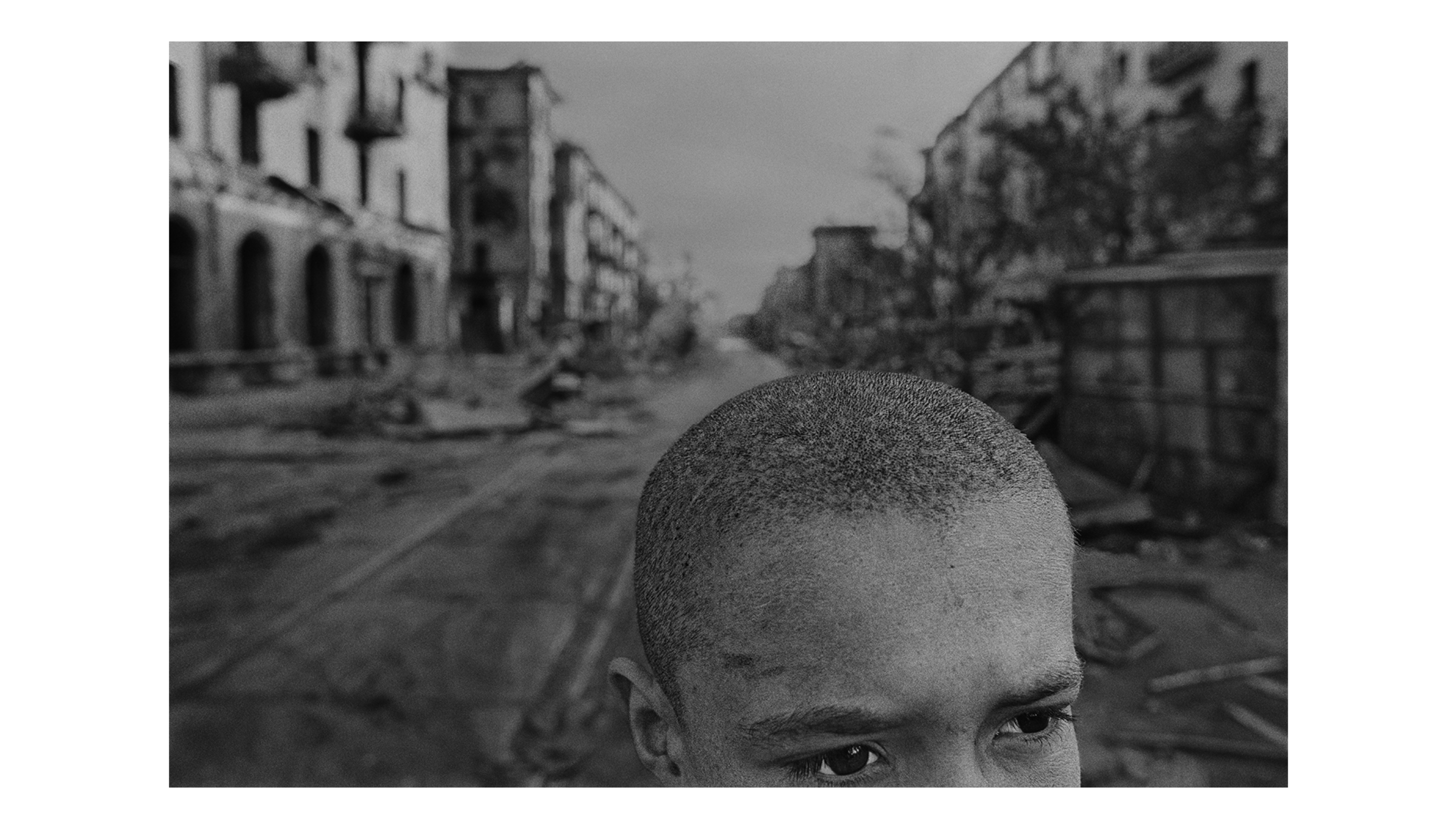
When I was 12, I stumbled upon a photograph by James Nachtwey: a child wandering through the ruins of Grozny during the first Chechen war. In retrospect, that’s what set me on this journey - a lifelong attempt to answer this one haunting question of my childhood: why was that child in Grozny walking alone through a ruined city?
Not long after came 9/11, Iraq, Afghanistan, Georgia, Crimea…looking back, there wasn’t a time in my life where a war was not occurring either next door, across the Black Sea (my home), or in the Near East.
My curiosity deepened into a passion - I wanted to understand the world, not just watch it burn on the screen.
Very soon I learned that geopolitics isn’t a single field - it’s an ecosystem. To grasp it, you must learn history, which ties to geography and resources (fertile lands, cotton, silk, gold, oil, gas, copper, etc.), which ties to trade, which ties to economics. Layer on philosophy and theology - because they shape nations, values, and institutions - and you begin to see the world as a living system made up of dynamic processes, not static silos.
That’s how a childhood curiosity turned into a 20-year passion project: studying history, religion, philosophy, economics, languages, and everything in between. Never professionally - I work in tech - but as a private pursuit of understanding.
Why am I telling you all this? Because my analysis doesn’t appear out of thin air. It comes from two decades of obsessive reading, observation, pattern recognition, and extensive travel across 4 continents.
When you study the world that way for long enough, your brain rewires itself for systems thinking. You begin to see patterns others - including and especially experts - oftentimes overlook.
I have no grand titles, no degrees in geopolitics, and no credentials to prove I’m right or wrong. Like Socrates, the only thing I know is that I know nothing. But out of that “nothing,” a picture has slowly emerged - and I’d like to share it with you.
The World is a Dynamic System of Shifting Polarity
The post–WWII world - or, as I like to call it, the sequel to WWI, the war that just keeps on giving - was multipolar. On one side stood the United States, Western Europe, and their East Asian allies; on the other, the Sino-Soviet bloc. When that bloc finally collapsed - a controlled demolition orchestrated by the very people who had built those failing systems - the world shifted into a new phase: unipolarity, with the United States at the center.
Whether we like it or not, there’s a reason we all speak (or try to speak) English, use American products, and consume American culture, music, and politics. I’m writing this on an American laptop, on an American writer’s platform, to be shared on American social media. That level of influence - linguistic, cultural, technological, commercial - has never before existed in human history.
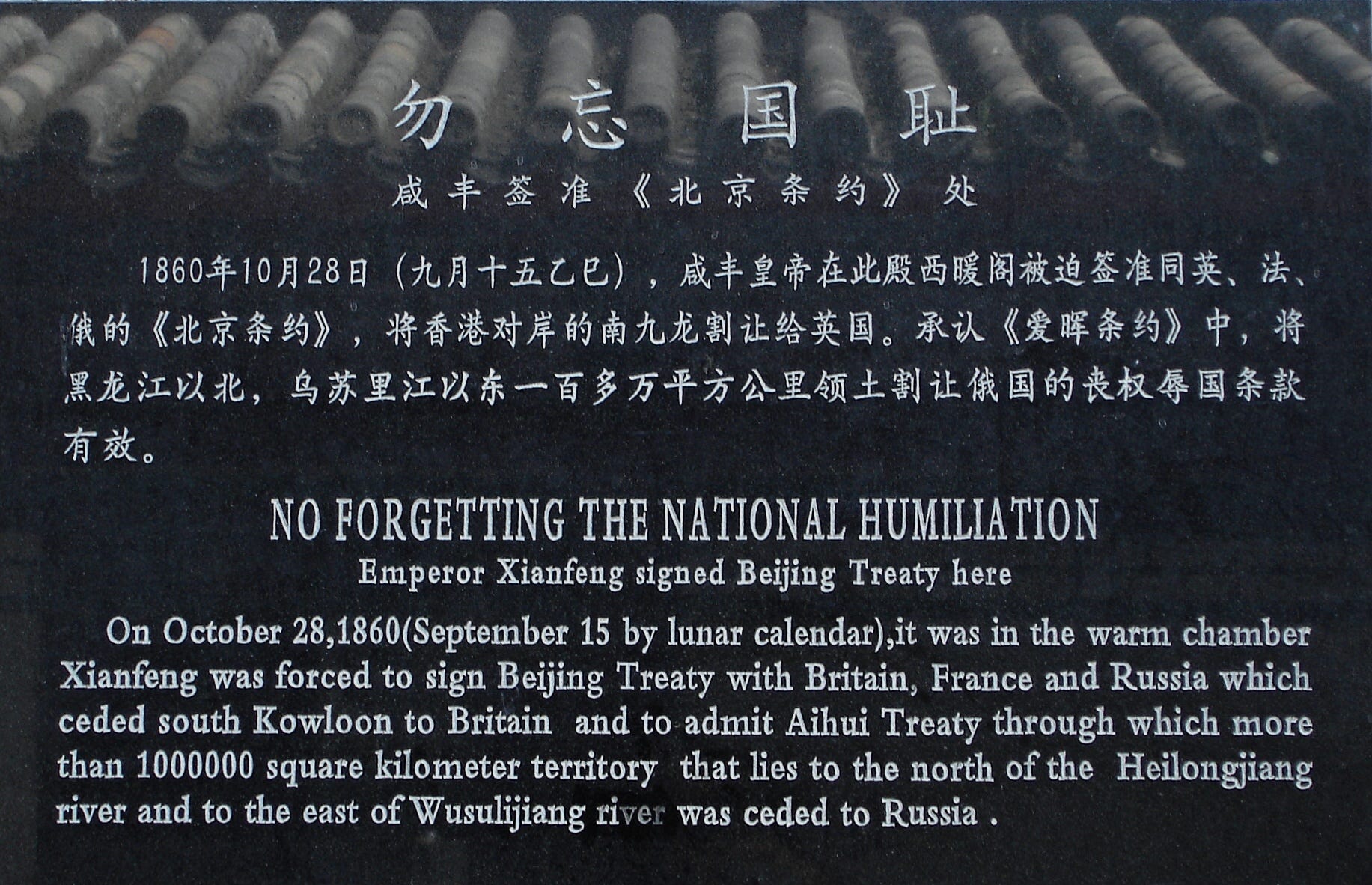
But as the 21st century unfolded, the balance began to shift. The Dragon of the East slowly lifted its head - the same head that had been bowed through what the Chinese themselves call “the century of humiliation.” Meanwhile, the West - comfortable, complacent, and untested since the Industrial Revolution - was unprepared to meet a serious adversary.
China plays the long game like no one else. It’s a civilization that has mastered the art of waiting. Couldn’t defeat the Mongols militarily? Fine - they would absorb and Sinify them over time. Couldn’t defeat the United States during the Cold War because communism was economically delusional? No problem - reform just enough to lure Western capital, offering cheap labor (and irresistible profits!) in exchange for technology and trade secrets. Then, through state-directed conglomeration and cross-subsidization, they would build industries large enough to dominate global supply chains.
You Can’t Build Anything with 99% of the Components
Today, the U.S. still designs the world’s most advanced weapons systems - but it can’t build them without China. A single F-35 jet contains nearly half a ton of rare earth minerals, all of which are processed under Chinese monopoly.
A recent Harvard study exposed an uncomfortable truth: strip out AI, and U.S. real GDP growth for the first half of 2025 drops to just 0.1%. America leads in AI software - but the chips that run it depend on materials like neodymium, praseodymium, and terbium. The West has them - Greenland alone holds massive reserves - but we refuse to mine or process them because our industries live and die by profitability and ROI. China’s don’t. Their industries operate on a different logic: power and control. Beijing will fund a company that loses money, as long as it gives the state leverage over the global system. The West will not (unless it’s some too-big-to-fail useless whale in tech or finance, of course).
What we’re witnessing is the clash of two advanced economies: one service-based, one production-based. Neither strong enough to conquer, neither weak enough to submit. The result? A bifurcated world - two poles, one planet.
Dual-Hegemony: How the World Will (Likely) Split
If neither side can win outright and neither is willing to kneel, the only logical outcome is a split - two spheres of influence, East and West. That’s what we’re watching right now. Every war (trade, hybrid, kinetic), every “sudden” foreign policy pivot by a mid-sized country, every realignment the Middle East - it’s all part of states choosing where they’ll land in this new structure. Don’t look at these events in isolation. They’re nodes in the same network.
The Ideology of Big Powers vs The Survival Pragmatism of Small Nations
Not every country can afford ideology. Most can’t. Only two categories really can.
1. Tier I powers: the U.S., China, and yes, Russia.
Yes, Russia is economically weak compared to the U.S. and China. Yes, it’s demographically aging, socially underdeveloped, and many of the republics within the federation have standards of living of the 18th century. None of that cancels out the fact that it’s vast, resource-rich, nuclear, and extremely good at information warfare, subversion, and destabilization. That alone keeps it in the big-league table, even if it has to sit on an ottoman, next to its Sino master (China).
2. Tier II actors: smaller states that punch above their weight because of geography or a crucial resource.
Think Qatar: tiny, but sitting on oil, gas, financing proxies, and able to influence the entire Red Sea / Levant security picture by where it channels money. One Gulf state funding the right (or wrong) group can slow down or threaten 80% of Europe’s trade flow through the Red Sea. That’s leverage.
Everyone else? They don’t have the luxury of ideology. They have the burden of survival.
For small and medium states, especially those sitting on fault lines - Taiwan, Baltic states, Balkan states, Central Asian republics - there often isn’t a real menu of options. Geography chooses for them. You align with the power that can actually reach you, protect you, or punish you. Everything else is theory.
Big powers want to rule. Small nations want to outlive big powers.
And if you open a history book, you’ll notice: the small ones are often the ones still standing after empires burn out.
The ideology of Russia
Historically, Moscow rose under the suzerainty of the Golden Horde. It didn’t overthrow the Mongols - it inherited them. Russia absorbed their fiscal, administrative, and military systems wholesale, then repackaged itself as the rightful heir of Kyivan Rus’ (modern-day Ukraine) through a mix of historical looting, church manipulation, and imperial mythmaking. Thus emerged the concept of Moscow as the “Third Rome.”
At its core, Russian state ideology rests on a kind of Holy Trinity: Moscow, St. Petersburg, and Kyiv. Kyiv, to them, is not a foreign capital - it’s their Jerusalem, the cradle of “Ancient Rus’.”
In Putin’s 2021 essay “On the Historical Unity of Russians and Ukrainians,” he folded Ukrainians and Belarusians into one people - a deliberate historical fabrication designed to justify Moscow’s dominion over both. Without Kyiv, Russia’s imperial narrative collapses. Hence, Ukraine must be “brought back” - where manipulation failed (the Yanukovych model), kinetic war followed.
Russia’s ideological engine is pan-Slavic expansionism, cloaked in nostalgia and sanctified by Orthodoxy. Its objective is not prosperity - it’s restoration. Restoration of empire, of influence, of the illusion that history owes them something.
The ideology of China
China’s worldview is not Western. It never has been. It’s civilizational, not ideological in the Western sense. Where Russia builds identity on myth, China builds it on continuity - a 5,000-year-old narrative of centrality, order, and hierarchy. The “Middle Kingdom” doesn’t see itself as a nation-state among equals; it sees itself as the axis around which the world should revolve.
In that worldview, Taiwan is not a foreign territory - it’s a lost province, a rogue offspring. The Western framing of “invasion” or “annexation” doesn’t compute inside the Chinese ideological lens. In Beijing’s mind, it’s reunification, a moral duty to restore wholeness. That’s why the rhetoric around Taiwan mirrors Russia’s rhetoric around Kyiv - both are sacred absences that make the empire feel incomplete.
But China’s ideology goes deeper than territorial obsession. It’s built on a philosophical scaffold: Confucian order, Legalist pragmatism, and the Mandate of Heaven - the belief that legitimacy flows from competence and harmony. When Mao’s communism shattered Confucianism, Deng Xiaoping quietly re-stitched it.
The result is a state that doesn’t worship Marx - it worships stability and control. Communism is merely the outer shell. Beneath it lies something far older: the imperial doctrine of harmony through hierarchy.
This is why Beijing can operate on a 100-year timeline while the West can’t plan past the next election cycle. It’s not about short-term gain - it’s about restoring the cosmic balance in which China sits at the center, surrounded by tributaries rather than allies. To them, history isn’t linear - it’s circular. What was lost must return.
The ideology of the United States
This is the messy one.
Because the U.S. is young (249 years is nothing compared to Russia’s imperial myth or China’s 5,000-year civilizational memory), and because it was founded as a commercial and constitutional project - not as an ethno-civilizational one - it doesn’t have a single, sacred, unbroken story about itself. No “Third Rome,” no “Middle Kingdom.” What it has instead is a set of operating assumptions. And right now, two of them are colliding.
1. The pragmatic / institutional ideology
This is the worldview of most of the U.S. classical political class, the Pentagon, and frankly, most normal Americans who follow world affairs. It says: we lead the liberal-democratic world, we trade with Europe and our East Asian allies, we integrate supply chains, we keep sea lanes open, we contain rogues, we keep the dollar dominant, we maintain alliances (NATO, Japan, ROK, Australia) because that’s what keeps the global system stable - and us prosperous. It’s outward-facing, cooperative, and very 1990s–2010s in spirit.
2. The Trump (or post-Trump) ideology
This one is inward-facing and hemispheric. It says: the era of being the world’s security provider is over. Protect the Anglosphere + Western Hemisphere first, everything else is optional. Keep Latin America from drifting toward China (hence pressure on Panama, and now Venezuela). Treat Canada like the 51st state. Treat the U.K. as the offshore cousin - which is why Brexit was so attractive to U.S. nationalist strategists like Bannon: pull London out of Brussels, bolt it tighter to Washington. And Greenland? That wasn’t a joke - that was resource strategy in the coming economic war with China. Hence, why talks about “purchasing” or outright annexing Greenland even made it to the mainstream.
In that frame, Taiwan is not a hill to die on. The Indo-Pacific is not worth a major war. Ukraine is viewed as a money pit and villianized, and continental Europe - especially the bureaucratic, moralizing, slow-moving EU - is outright loathed.
So, unlike Russia and China, which run on one core myth, the U.S. right now runs on two competing foreign-policy software packages:
one globalized and partnership-based,
one nationalist and hemispheric.
Which one wins will define the shape of the 21st century. And no, it’s not settled yet.
A Chessboard of Moving Pieces
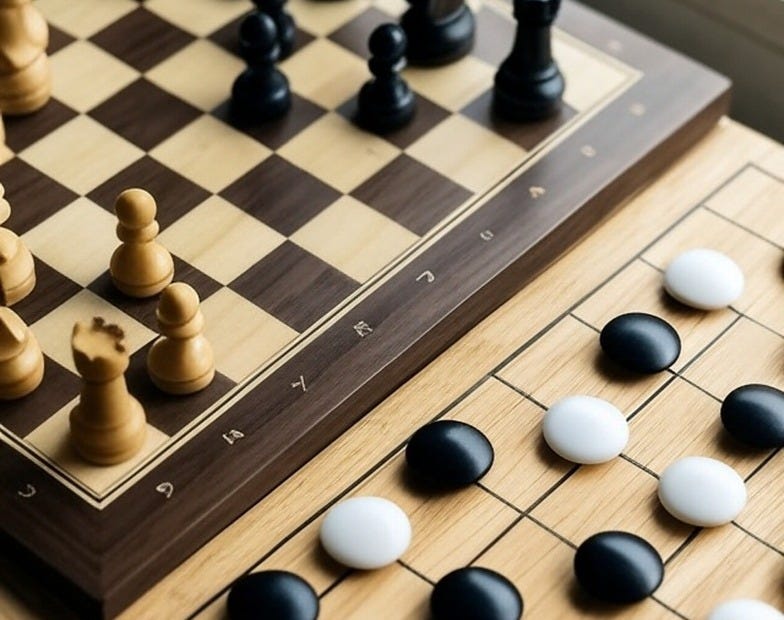
The board is set - whether you imagine it as chess or Go depends on which side of the world you’re from - and the pieces are already in motion. Some move with precision, others stumble forward by inertia. Realignments are happening in real time, visible only to those who know how to read the quiet part out loud.
Singapore’s Prime Minister, Lawrence Wong, put it best in a recent interview with the Financial Times:
“We are certainly in the midst of a great transition to a multipolar world. No one can tell how it will unfold, but there is no doubt it will be messy and unpredictable.”
The United States, he noted, is stepping back from its role as global insurer, yet no one else is capable - or willing - to fill the vacuum. We now live in that uncomfortable space between eras: where the old rules no longer apply, and the new ones haven’t yet been written.
Across the world, every actor is improvising. In Taipei, the KMT flirts with “reunification talks” as a survival strategy, echoing Beijing/Moscow rhetoric on the war in Ukraine, in the hope of negotiating its own safety.
In Europe, Ukraine bleeds daily to finalize its divorce from the Russian world, while the continent dithers between being at the table or on the menu.
In Washington, the Pentagon operates almost as a sovereign entity - shoring up alliances with Seoul and Tokyo, trying to revive American shipbuilding, while Beijing sabotages those attempts and tries to pull South Korea in its own growing sphere of influence.
And in the Western Hemisphere, Trump is isolating Canada diplomatically as an attempt to weaken them to subversion, while pushing China out of Latin America through the Venezuelan front.
It’s a world of collision and contradiction: democracies that trade with autocracies while condemning them, nations that pledge loyalty to one bloc while buying energy from another. The global system is no longer a table of allies - it’s a theater of transactions.
What happens next will be a downstream of irrational ideology, but ultimately decided by endurance - who can hold their nerve longest while the rules are being rewritten. Because history, as always, rewards not the loudest players, but the ones who understand that power is not seized in noise and spectacle, but in silence - one quiet, calculated move at a time.