


As I mentioned in a previous article - in the long run, atheism caused more harm than good, and I don’t mean this on a spiritual or theological level, but on a social engineering one. Atheism re-engineered entire generations out of the sanctity of intuition and understanding of a bigger, more ideologically-aligned picture.
Everything - from nature to human action to industry - needed to make logical, rational, and scientific sense. It came attached with a cost-benefit analysis and ROI. But what is more, atheism left a vacuum that was filled by false idols = post-modernist French philosophy, popular culture, and markets. Dear God, the goddamn markets!
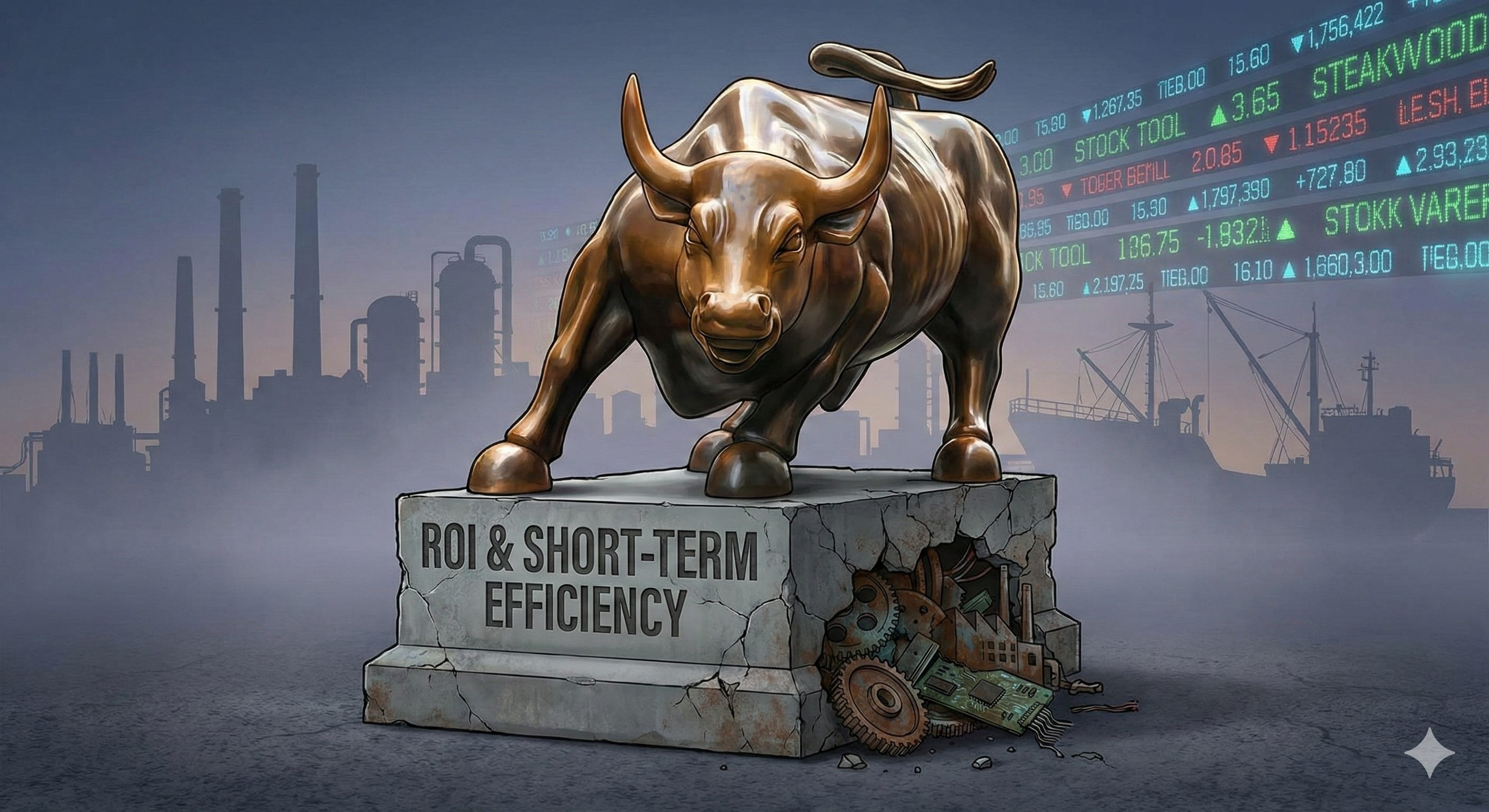
Markets became the new God. The invisible hand of the market will fix everything and anything. The markets are supreme.
Disclaimer: The following lines are written by a child of the post-communist world order of Eastern Europe, a free market capitalist (which we no longer have) and a Hayekian (which we never truly implemented, because Keynes).
And even I, who loathe government interventionism in free market enterprise, recognize that in rare instances - especially related to national security, where the market hasn’t gotten it right in its pursuit of profit - a case can be made for government intervention.
Industry IS National Security
People fall for the idea that industrial policy is about making your own t-shirts or bicycles. No. Industrial policy is necessary in matters of national security. When the markets fail to make an investment in a critical industry, government and taxpayer money need to fill the gap.
As former U.S. Commerce Secretary Gina Raimondo put it bluntly: “It’s much easier to get industrial policy wrong than to get it right.”
Take rare earth minerals and semiconductors as an example. Forty or fifty years ago, the United States led the world in semiconductor manufacturing. Americans made components, printed circuit boards, mined rare earth minerals - all domestically. Then the magical market prioritized profit, margins, and efficiency. America took its eye off the ball.
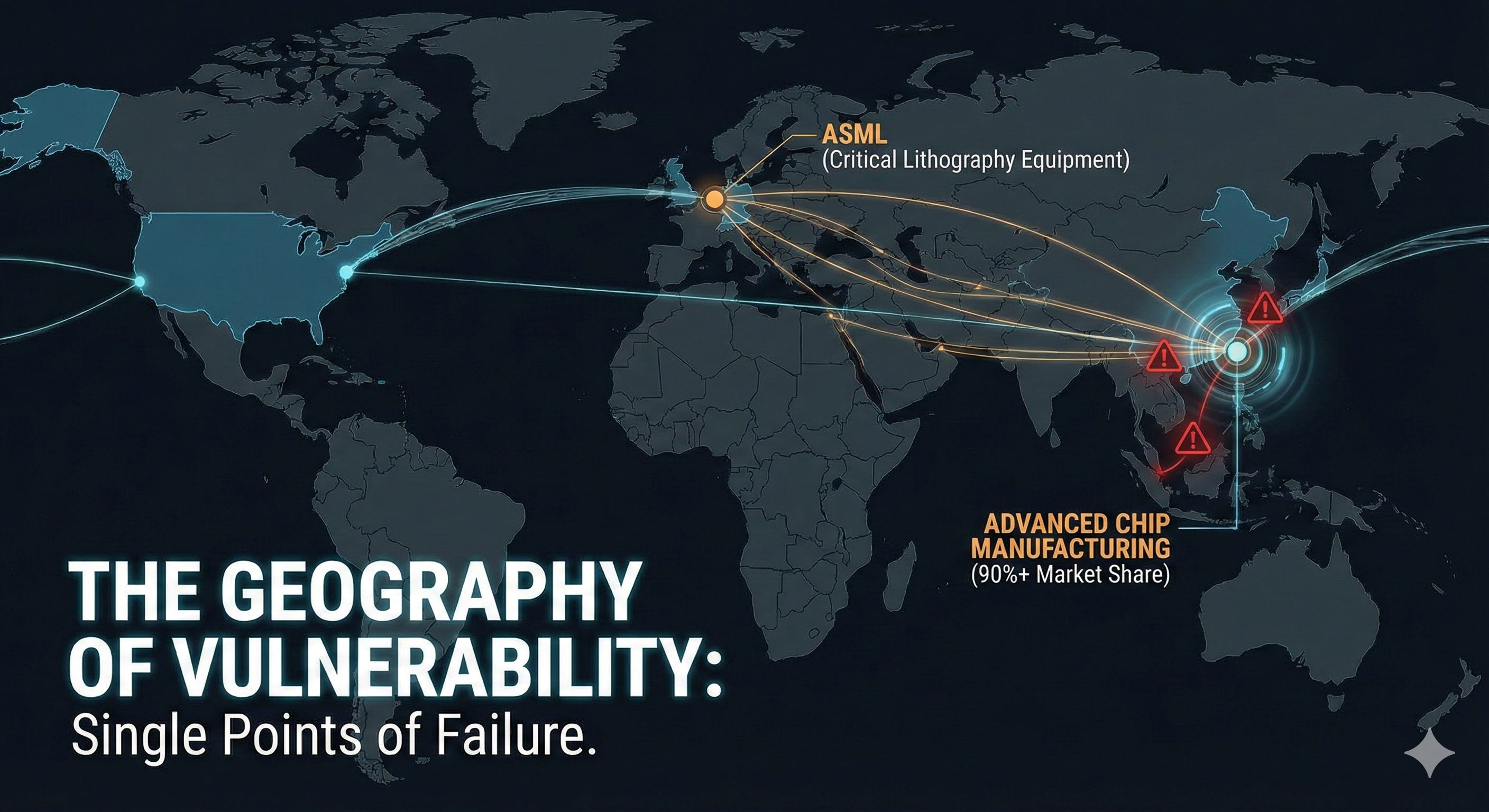
The result? The United States one day woke up and realized that 100% of every AI chip is made in Taiwan.
Try to find a printed circuit board, substrate, chemical, or packaging material made in America - you can’t. So in cases like that, where national security is at stake, governments should intervene and the U.S. did just that with the CHIPS Act under Secretary Raimondo.
The Market’s Catastrophic Blind Spots
But America intervened too late. The CHIPS Act’s $100 billion (direct spending plus tax credits) is a band-aid on a decades-long hemorrhage. The United States is now spending taxpayer money to rebuild capabilities it once dominated - capabilities it voluntarily surrendered in pursuit of quarterly earnings reports.
The problem isn’t limited to semiconductors. It’s systemic:
Pharmaceuticals: When COVID-19 hit, Americans discovered that 90% of their antibiotics and 80% of active pharmaceutical ingredients came from China and India. According to a 2025 study, China accounts for 62.6% of antibiotic API imports to the United States, with that figure reaching 70.1% in 2024. Secretary Raimondo warned bluntly: if China “decided no Tylenol, Penicillin, or various antibiotics in America, there wouldn’t be any.” The market had efficiently relocated production to wherever labor was cheapest. The result? A national security vulnerability disguised as supply chain efficiency.
Steel and Aluminum: The United States is down to just four operating aluminum smelters with a combined capacity of 650,000 metric tonnes per year—a collapse from approximately 30 smelters in 1980. In 2024, one major smelter accounting for nearly 30% of U.S. primary aluminum production shut down, reducing American capacity by nearly one-third. The U.S. steel industry faces similar decline. As Raimondo noted, “Back to national security”—you need domestic capacity for wartime production.
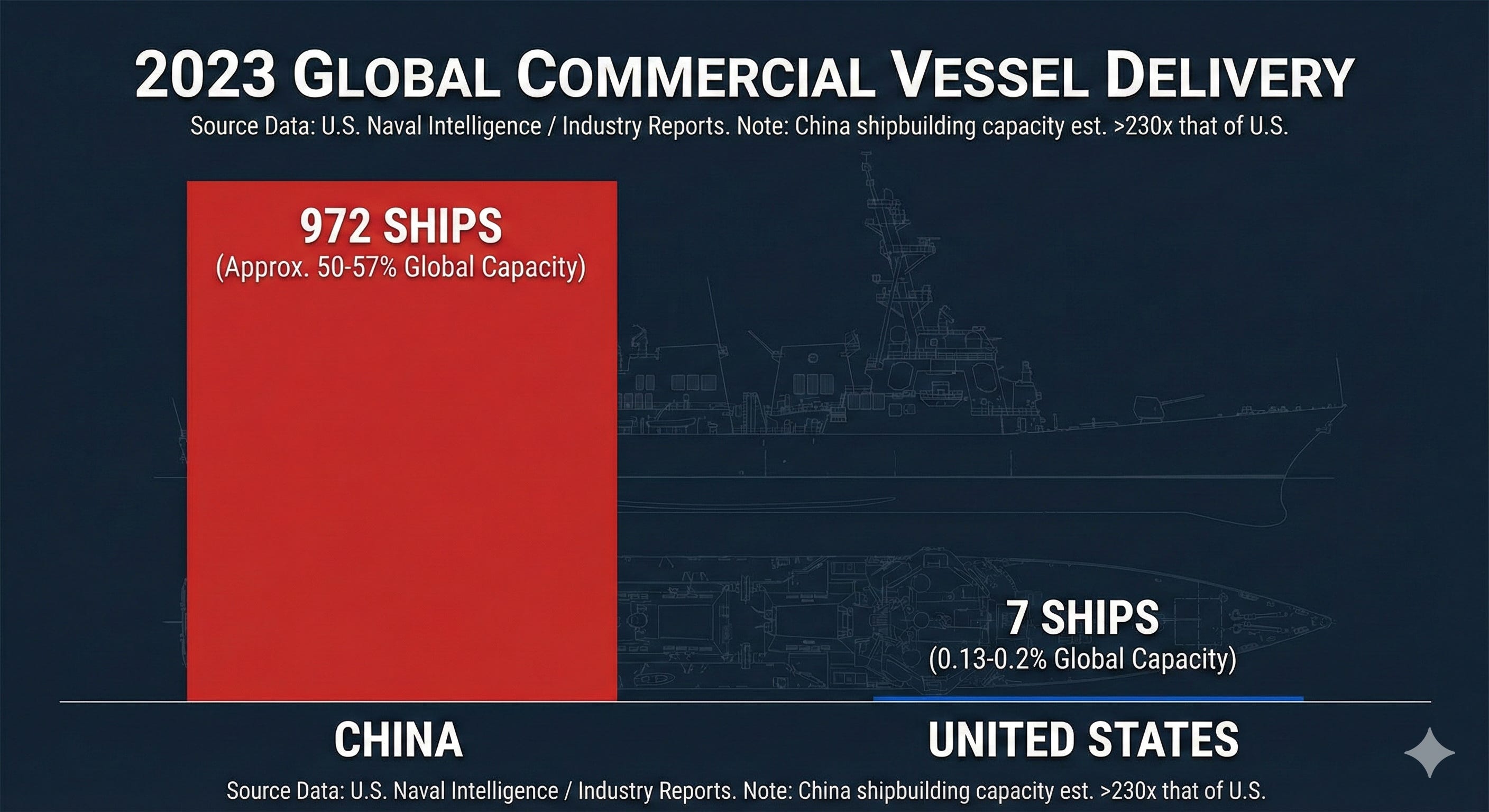
Shipbuilding: China controls approximately 50-57% of global shipbuilding capacity, delivering 972 commercial ships in 2023. South Korea accounts for roughly 17-29% depending on vessel type. The U.S.? The United States accounts for just 0.13-0.2% of global commercial vessel production, delivering only 7 ships in 2023. According to U.S. Naval Intelligence, China’s shipbuilding capacity is over 230 times that of the United States. When you can’t build ships, you can’t project naval power. When you can’t project naval power, your security guarantees to allies become increasingly hollow promises.
Biotechnology: Perhaps most alarming is what’s happening right now with biotech. In 2020, the U.S. led biotech patents with 39% of the global share, while China held only 10%. By 2023-2024, the situation had dramatically shifted. China now accounts for 38-41% of global biotech patent applications and grants, while in targeted protein degradation specifically, China received 400 granted patents in 2024 compared to just 187 for the United States.
The United States used to just do contract manufacturing with China; now American companies are contracting out R&D itself. China’s share of outlicensing biotech deals jumped from 8% in 2021 to 32% in early 2025 - a four-fold increase in just four years. As America finally weans itself from Taiwan on chips, it’s going the other direction with biotech - becoming more dependent on China for medicine, research, and the next generation of pharmaceutical innovation.Critical Equipment Dependencies: There’s a company in the Netherlands called ASML. They make gigantic semiconductor lithography equipment—machines as big as a room. They’re essentially the only company in the world that can make the most advanced versions. You need these machines to make leading-edge AI chips. As Raimondo said: “That is a problem. That is a vulnerability.”
Even Europe, with its advanced manufacturing base, faces this single-point-of-failure risk
The False God of Comparative Advantage
The economic priesthood will invoke David Ricardo’s theory of comparative advantage: let each nation specialize in what it does best, and everyone benefits through trade. Beautiful in theory. Catastrophic when your comparative advantage is “writing software” while your strategic competitor’s comparative advantage is “making everything software runs on.”
Comparative advantage assumes benign trading partners. It assumes access to global markets remains open during crises. It assumes that other nations won’t weaponize supply chain dependencies. These assumptions aren’t just naive—they’re dangerous.
Even more problematic: comparative advantage assumes fair competition. If it were a fair fight with China, we probably could compete. But China cheats and doesn’t play by the rules.
China massively subsidizes solar panels, the inputs for solar panels, critical minerals that go into batteries, and the entire supply chain for Chinese EV companies. That is not free trade.
Look at BYD cars - direct result of massive Chinese subsidies. Look at Huawei. People thought sanctions would hobble them. They came back stronger than ever, making chips - all because it’s a champion company backed by unlimited government resources.
This isn’t market competition. It’s industrial warfare.
What Industrial Policy Should - and Shouldn’t - Look Like
Here’s where nuance matters. Not all manufacturing is created equal, and not everything deserves government support.
There’s no competitive advantage in re-shoring production for bicycles and car seats for babies. But certain industries that are critical critical to national survival cannot be left entirely to market forces:
Semiconductor manufacturing – Not just final assembly, but the entire supply chain
Rare earth mineral extraction and processing – Currently 80% controlled by China
Pharmaceutical APIs and critical medicines – Basic antibiotics shouldn’t require Chinese cooperation
Advanced biotechnology and biotech R&D – The West is losing this race right now
Shipbuilding and maritime industrial base – Naval power requires industrial capacity
Steel and aluminum production – You can’t build ships, tanks, or infrastructure without it
Battery technology and production – The future of defense mobility depends on it
Advanced manufacturing equipment – Can’t be dependent on a single foreign source
The goal here is resilience - ensuring that no single nation can hold critical capabilities hostage.
How to Execute Industrial Policy (Without Destroying Value)
The Biden administration’s approach to the CHIPS Act offers important lessons - both in what worked and what didn’t.
What Worked:
The administration recruited investment bankers from Goldman Sachs, Blackstone, KKR, and McKinsey to negotiate with semiconductor companies. This generated backlash from senators asking why Commerce was hiring from Wall Street.
Former Secretary Raimondo’s response was: “I’m investing money. I need investors.” These companies have tough negotiators, and if you just have typical Washington policy people, “we’d lose our shirts.”
More importantly, they structured grants with accountability:
Companies get X dollars upfront
Once they build the fab, they get more
Once they get their first customer, they get more
The goal was to avoid giving Intel $10 billion upfront, having them build a beautiful shell of a fab with no customers, and being out of money. The tranched structure ensured deliverables.
The mission was clear: purchase a national security outcome. There is only one company in the world - TSMC -0 that can make the most advanced semiconductors. If Commerce had just given everybody a standard 25% tax credit and didn’t get TSMC to build six fabs in Arizona, they would have failed the mission.
What Didn’t Work:
The pure R&D portion of the CHIPS Act - $6-7 billion designated not for company grants but to invest in research, startup companies, incubators, and the next wave of technology - was completely undone by the subsequent administration.
The Workforce Crisis No One’s Talking About
Here’s something China is doing well that the West is ignoring: workforce strategy.
China recently rolled out thousands of career and technical vocational schools. Meanwhile, the average age of a pharmaceutical worker in America is 55. The average age of a plumber, welder, or electrician is 50.
The United States doesn’t have an effective workforce system. American policy incentivizes attendance - Pell grants and the GI Bill incentivize college attendance. The system sends everybody to college. Many don’t graduate, or they graduate without skills for an actual job.
China is incredibly intentional about workforce strategy. The United States doesn’t even teach molecular biology in most high schools, yet America wants to lead the world in biotech.
Europe faces similar challenges. If the West is serious about industrial policy, it needs to be serious about workforce development. Otherwise, nations are building fabs with no one qualified to operate them.
The China Question: Strength vs. Arrogance
Managing the relationship with China requires something the West is currently lacking: nuance.
The world can’t handle a heated conflict with China. The United States has almost a trillion dollars - $700 billion - of trade with China, 99% in commodity goods. That’s actually a good thing, as long as the critical 1% doesn’t include things that can kill you.
What should the approach be?
Make the West stronger so it can go toe-to-toe with China. Don’t deal with China from a position of arrogance. Deal from a position of strength. Take them at their word and operate in a more nuanced way, so there isn’t constant tit-for-tat escalation.
Right now, America is operating from a position of weakness disguised as strength. The U.S. throws out 100% tariffs, except till tomorrow when it says “not really.” Meanwhile, if China wanted to play hardball - no Tylenol, no Penicillin, no antibiotics; or if they decided to take over Taiwan - they have a lot of cards to play.
The better approach: Get to the business of strengthening Western capabilities, including transatlantic relationships, and deal with China from a much stronger position. Stop trying to boss them around. Develop a better sense of nuance.
The Alliance Question: America First vs. America Alone
One of the biggest strategic mistakes America is making: alienating all its allies.
America First is one thing. America Alone is a disastrous policy.
An America that’s not a good friend or partner to Europe, Japan, Korea, India - that’s a weak America. The United States cannot be effective without strong relationships with Europe and Southeast Asia.
Consider what could be accomplished with deeper partnerships:
Europe: ASML in the Netherlands. Deeper commercial relationships. Joint R&D initiatives.
Japan and Korea: Advanced manufacturing. Semiconductor partnerships.
India: Massive mistake not developing this relationship more strategically.
Southeast Asia: Critical position in supply chains.
What is America’s competitive advantage? The United States has a culture of risk-taking that’s unique. It has entrepreneurship that’s unique. It has rich, deep capital markets better than the rest of the world.
America is at its best when it’s leading and drawing the world to it as friends, not dictating as “we’re in charge.”
What the United States is doing right now is giving the Heisman to the rest of the world. If Americans think everyone is going to sit around and wait for them to come back, they’re delusional.
Meanwhile, China is right there every day in Europe, Africa, Latin America, and Southeast Asia. It’s hubris by America to think it’s the only option.
As a European observing this, I can say: if America pisses off Europe enough and it helps Europe get its act together with its own economy and industrial policy, that might be the one silver lining. Because a strong European economy is good for the world - and necessary for our own security.
The Cost of Inaction
Some will argue that maintaining domestic industrial capacity is expensive. They’re right. It costs more than outsourcing to the cheapest global bidder.
But what’s the cost of dependence?
Ask Europe about depending on Russian natural gas. Ask Taiwan about its semiconductor leverage being its only deterrent against Chinese invasion. Ask any nation that discovered during COVID that masks, ventilators, and basic medical supplies all came from a single country that could—and did—restrict exports.
During COVID, massive problems with packaging plants in Malaysia ground supply chains to a halt. Geographic concentration is a vulnerability, even when it’s not in an adversarial nation.
The market optimizes for efficiency. National security requires redundancy. These goals are fundamentally in tension.
Where Government Should and Shouldn’t Intervene
The key question: What is the purpose of industrial policy? Then design a policy that allows you to achieve that purpose.
Government Should:
Fund basic research (quantum, biotech, next-gen semiconductors)
Invest in infrastructure
Develop workforce training aligned with strategic needs
Support industries where market failure meets national security imperatives
Maintain bipartisan or cross-party focus on national security issues
Government Should Not:
Pick winners and losers in commodity manufacturing
Subsidize industries with no national security rationale
Replace private capital in areas where markets function
Make equity investments in individual companies
Implement blanket tariffs that just tax consumers
There are about 100 times more people who work in industries that use steel than in industries that produce steel. The manicure industry is about six times as large as the steel industry in the United States. When you raise the price of steel, you’re not just protecting steel jobs - you’re potentially destroying more manufacturing jobs downstream.
The difference between manufacturing and service jobs - and this matters - is that manufacturing leads to R&D, which leads to more manufacturing, which leads to more innovation. There are compound benefits.
But that’s an argument for strategic industrial policy, not blanket protectionism.
Conclusion: Remembering What Markets Are For
Markets are tools - powerful, productive tools for organizing economic activity and creating prosperity. But like any tool, they’re suited for specific purposes. You don’t use a screwdriver to hammer nails, and you don’t use market optimization to ensure national survival.
The atheism I described at the beginning removed any sense that some things transcend cost-benefit analysis. Some things - national sovereignty, security, the ability to defend yourself and your allies - cannot be reduced to profit margins and ROI calculations.
Industrial policy isn’t about rejecting markets. It’s about remembering that markets serve nations, not the other way around. And when markets fail to preserve the industrial capacity needed for national survival, government intervention isn’t just justified - it’s necessary.
It is essential that these issues remain bipartisan. When industrial policy becomes purely partisan, it becomes vulnerable to political winds rather than strategic necessity.
The invisible hand is powerful, but it’s not omniscient. And it certainly doesn’t give a damn about whether a country can defend itself, whether it can manufacture antibiotics during a pandemic, or whether it will have access to the advanced chips that power AI when geopolitical tensions flare.
The West needs to stop worshiping at the altar of market efficiency and remember that some things are too important to outsource. Our security depends on it. Our prosperity depends on it. Our sovereignty depends on it.
The markets won’t save us from strategic dependence on adversaries. Only deliberate, focused, accountable industrial policy will.
And we’d better get it right, because as Secretary Raimondo warned: “It’s much easier to get industrial policy wrong than to get it right.”
The question isn’t whether to have industrial policy. China has already answered that question for us. The question is whether the West will execute it competently—with the right focus, the right accountability, and the right understanding that this isn’t about making everything domestically.
It’s about making sure nations can make the things that matter when it matters most.
Disclaimer: The following lines are written by a child of the post-communist world order of Eastern Europe, a free market capitalist (which we no longer have) and a Hayekian (which we never truly implemented, because Keynes)." I love it Bianka! Keep them coming...
Great post as always, as an engineer I can only concur, I keep being surprised at how basic conclusions have not been drawn in the Anglosphere, I wouldn't say "the West" since some countries do it right (Germany, Austria, the Nordics, Czechia). I also listen to Raimondo's speeches ;) I can find the bits. Assesment for the US is grim also because its culture is not fit to the task, the "car culture" has had detrimental effect in that it has fostered individualism under conditions of historically unprecedented abundance making them, as a collective, much less adapted to managing and sharing limited resources or space than are Europeans, Japanese or Chinese who have experience of managing scarcity for thousands of years.