


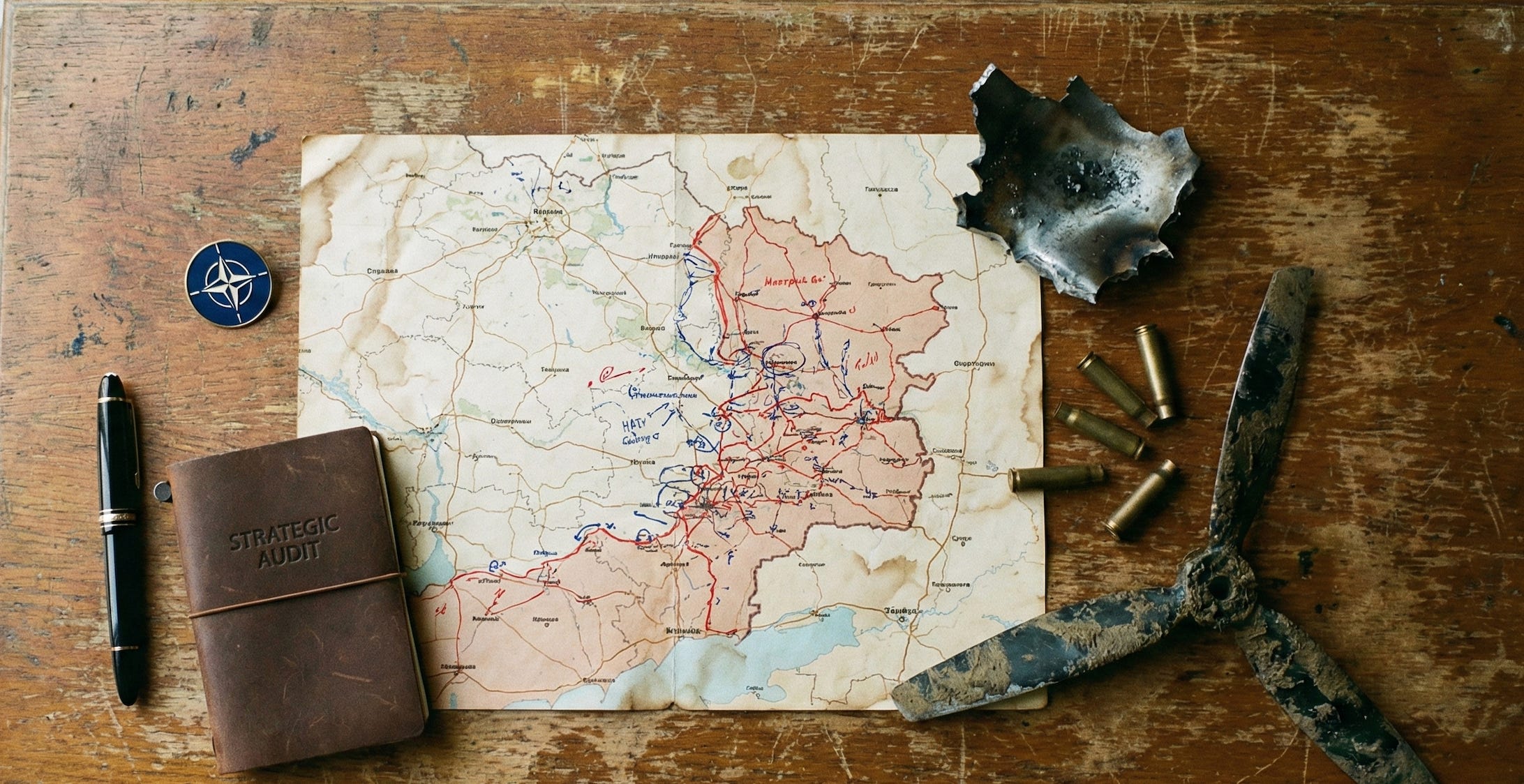
Four years ago, Russians woke up to state television telling them their army was conducting a “special military operation” to “denazify” a country led by a Jewish comedian. Ukrainians woke up to cruise missiles, and the rest of Europe woke up to the uncomfortable realisation that all those Eastern European diplomats they’d been politely ignoring for two decades had been right about everything.
Since then, tens of thousands of people have died, millions have been displaced, and a generation of young men have been sacrificed in a land war that Europeans swore after 1945 they’d never happen again. Entire cities have been turned into rubble, children have been kidnapped and deported for Russification, the international rules-based order has revealed itself to be less of a system and more of a…vibe, really.
But four years is long enough to start sorting through the wreckage with some analytical clarity. So let’s do the good, the bad, and the ugly - not as a scorecard, but as a strategic audit.
The Good
Ukraine didn’t fall!
This sounds so obvious now that it’s easy to forget how extraordinary it is. When Russian armour rolled toward Kyiv in February 2022, the consensus among Western intelligence agencies - to say nothing of the Kremlin - was that this would be over in days, if not a few weeks. It’s a sentiment that was echoed through international media, geopolitical analysts and pretty much everyone else…but Ukraine.
The Americans offered Zelensky an evacuation flight, he asked for ammunition, and the Ukrainians did what no one outside of Eastern Europe expected them to do: they fought, and they fought bravely and effectively.
The failure of Russia’s decapitation strike against Kyiv was one of the most consequential military outcomes of the 21st century. It shattered the mythology of Russian military might that Moscow had spent two decades carefully cultivating through information operations, staged military parades, and the selective deployment of force in places like Syria. When Russia’s vaunted VDV airborne forces got slaughtered on the tarmac at Hostomel Airport - an elite unit, wasted in a suburban parking lot - the entire Russian theory of war was invalidated in real time.
Ukraine’s defence industry became a case study in wartime innovation
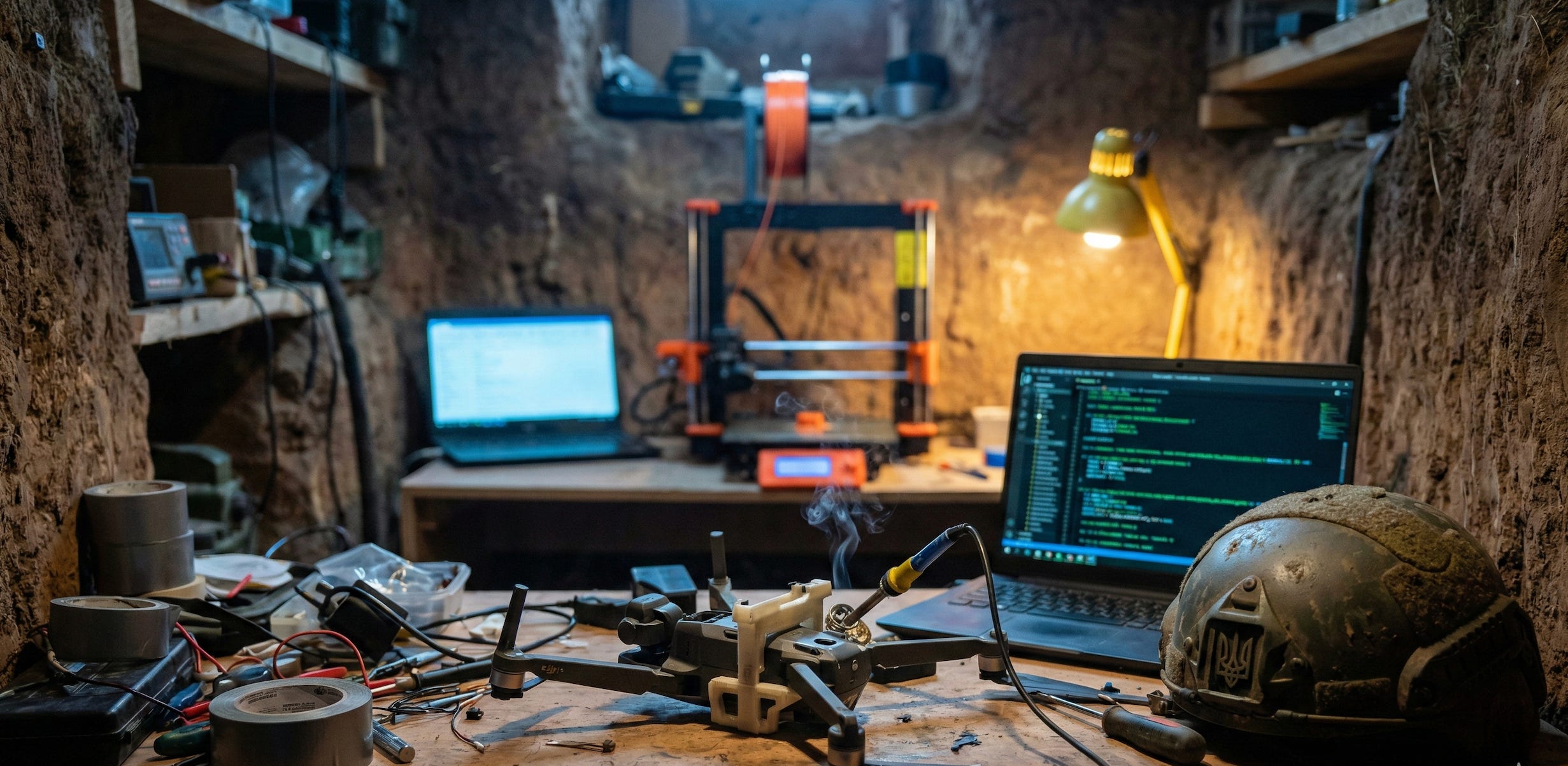
This is arguably the most underappreciated story of the war. Out of sheer necessity, Ukraine built a domestic weapons production ecosystem almost from scratch. Ukrainian companies and volunteer networks began producing drones - surveillance drones, strike drones, FPV drones - at a pace and scale that stunned Western defence analysts who’d spent years writing procurement memos about how you can’t possibly field a new weapons system without a 15-year development cycle and multiple rounds of congressional or parliamentary hearings.
Ukrainian engineers iterated on drone designs the way a Silicon Valley startup iterates on software: fast, cheap, and ruthlessly focused on the user (the user in this case being a soldier who needs to drop a grenade on a Russian trench from a $500 quadcopter). They developed long-range strike drones capable of hitting targets deep inside Russia - oil refineries, ammunition depots, airbases - at a fraction of the cost of a cruise missile. They turned commercial off-the-shelf components into battlefield systems, pioneered electronic warfare countermeasures, and built automated production lines in dispersed facilities to survive Russian targeting.
The result is that Ukraine now has one of the most battle-tested and innovative defence technology sectors on the planet. It has proven concepts that Western militaries are still writing white papers about. When this war ends, Ukrainian defence firms will be globally competitive - and every NATO country should be lining up to buy from them, invest in them, or partner with them. This is a genuine strategic asset that didn’t exist 4 years ago.
The Russian theory of victory was proven wrong
Moscow’s entire strategic calculus rested on a chain of assumptions: Ukraine wasn’t a real country, Ukrainians wouldn’t fight, the government would collapse, and the West would issue a strongly worded statement and move on. Every single one of these assumptions was wrong, and four years in, Russia still hasn’t developed a substitute theory of victory that accounts for reality. They can’t take major cities, can’t break Ukrainian morale through terror bombing, can’t outlast a country that is fighting for its survival on its own soil.
The longer this goes on, the more the Kremlin’s position erodes. Russia is burning through its Soviet-era equipment inheritance, its sovereign wealth fund, its demographic future, and its relationship with every country that isn’t actively sanctioned or run by a dictator. Time is not on Russia’s side the way the armchair strategists believe, and the evidence is accumulating.
Europe started to wake up
Slowly, yes. Painfully, even more so. With much bureaucratic foot-dragging and inter-ministerial squabbling, but it happened. Defence budgets across Europe have increased meaningfully for the first time since the Cold War. Countries that spent decades treating their militaries as jobs programmes for civil servants began actually thinking about what their armed forces are for. Poland emerged as a serious military power. The Nordics joined NATO. Germany - Germany! - began talking about defence in terms that would have been politically suicidal five years ago.
Is it enough? No. Is it fast enough? Also no. But the trajectory has shifted, and that shift is structural, not cyclical. The political consensus in Europe that defence spending is wasteful and NATO is an anachronism has been shattered, probably forever. You can’t put that genie back in that bottle. Even politicians who personally couldn’t care less about Ukraine understand that their voters now expect them to take defence seriously - we are talking about a political equilibrium change, and those are durable and unlikely to die out in the next election cycle.
The Bad
The West’s strategy of “enough to survive, never enough to win.”
From the beginning, Western aid to Ukraine was calibrated not to help Ukraine achieve its war objectives, but to prevent the worst-case scenario while avoiding the West’s own worst-case scenario of direct confrontation with Russia. Every weapons system was delivered late, in insufficient quantities, with restrictions on use that made military planners tear their hair out. Washington sent HIMARS but agonised for months about ATACMS, they sent air defence systems but rationed them.
The underlying problem is that the American military, for all its staggering expenditure, is optimised for a very specific kind of war: one in which the US provides air superiority, intelligence, and logistics while some local partner provides the ground troops. This is a perfectly fine model if you’re fighting insurgents in the Middle East, and it’s far less useful when your partner needs the kind of mid-tier conventional equipment - self-propelled artillery, counter-battery radars, short-range ballistic missiles - that the US simply doesn’t produce in large quantities because it doesn’t need them for its own doctrine. The Pentagon was caught between not wanting to give away equipment it might need and not having the industrial base to produce more quickly, especially since China has been choking them on materials and components (which the U.S. military industrial complex is very dependent on) since 2015.
The 2023 counteroffensive was a strategic disaster - not so much militarily, but politically
In terms of the actual balance of forces, the failed southern offensive didn’t dramatically change the equation on the battlefield, but its effect on Western public opinion was catastrophic. Within a month of the offensive stalling, support for Ukraine aid in the US dropped by double digits. The offensive had been over-hyped by people who should have known better, and when it didn’t produce a dramatic breakthrough, it created a narrative of futility that Russia’s information warriors exploited mercilessly.
The blame game that followed made things worse. Zelensky blamed the West for delivering aid too slowly, his supporters in Western media amplified this message, creating a doom loop in which every new weapons system was described as game-changing until it arrived, at which point it was retroactively declared too late. This was effective as a lobbying strategy for securing more military support out of a cautious White House, but it had devastating second-order effects. The Russians immediately activated their highly-sophisticated propaganda machine to convince the already skeptical part of the public that this was just another American proxy war, and I would argue in good faith - the Kremlin are still hoping that the war could be won by outlasting Western political will to support Ukraine.
The “European freeloader” narrative took hold in Washington
The companion argument - that Europe was too decadent and welfare-dependent to defend itself - became conventional wisdom in American foreign policy circles with alarming speed. The argument was always overstated (as I have explained in detail in another article). It relied on the dubious premise that the war in Ukraine, fought with last-generation aircraft and current-generation air defences, was a template for what a NATO-Russia war would look like. It isn’t. Europe has modern stealth-capable air forces, not Soviet-era hand-me-downs. Italy alone has a more powerful navy than Russia. The problem was never capability - it was political will and industrial readiness, both of which are solvable given sufficient motivation.
But the narrative stuck because it was useful to too many people. American hawks used it to justify demanding more burden-sharing. American isolationists used it to justify abandoning Europe entirely. And European politicians, rather than forcefully rebutting it, mostly shuffled their feet and mumbled about how they were working on it, which reinforced the wrongful impression that they were, in fact, freeloading.
The Ugly
The Istanbul “peace deal” mythology became a weapon against Ukraine
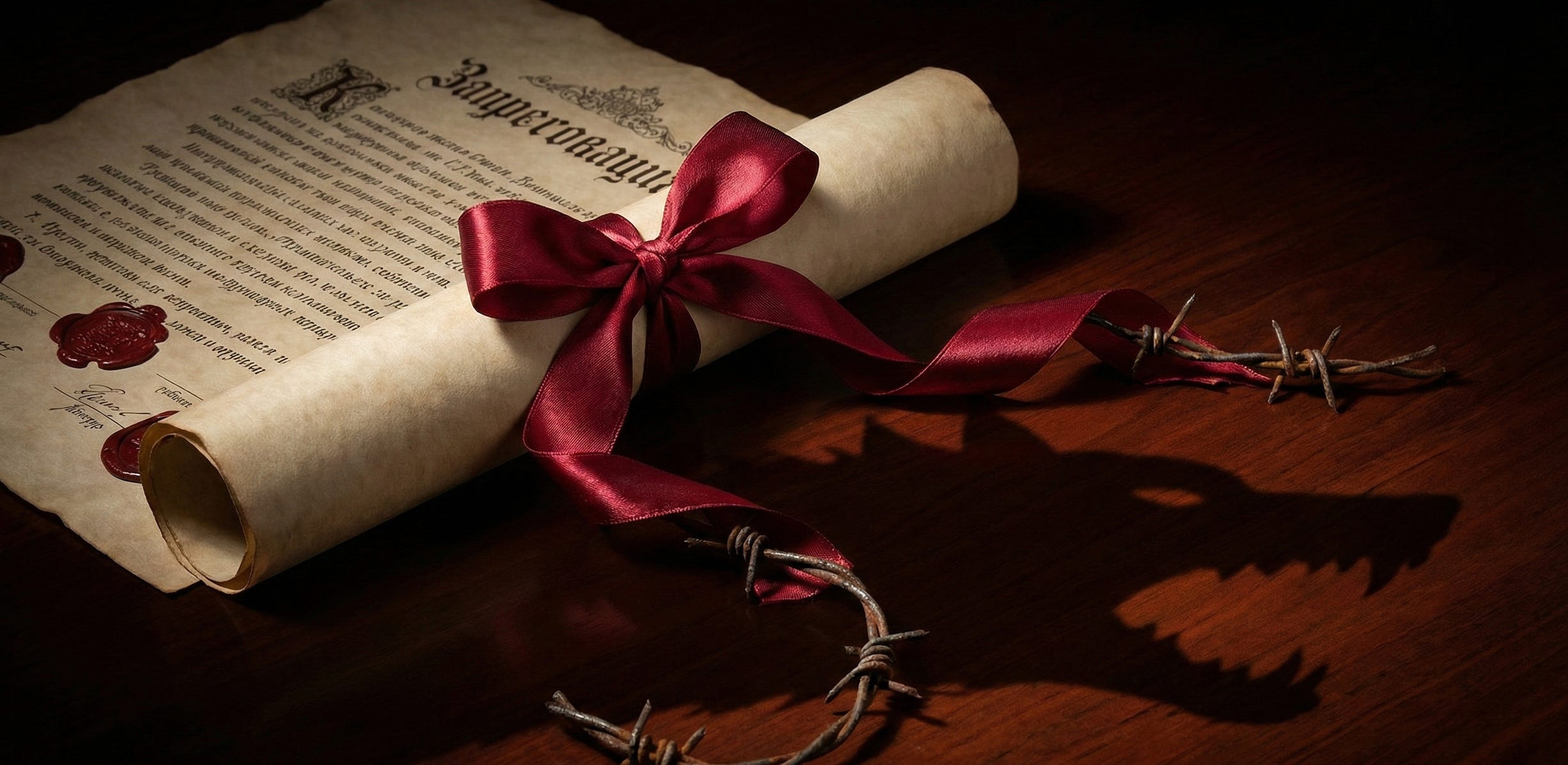
In 2023, Putin casually mentioned that Ukraine had nearly signed a peace deal in the early weeks of the war but walked away under Western pressure. This was picked up and amplified by a remarkable coalition of Russian propagandists, Western isolationists, and credulous foreign policy commentators who were desperate to believe that the war was unnecessary and could have been avoided if only Jake Sullivan weren’t such a bloodthirsty warmonger.
The reality, of course, was rather different. Read the actual terms Russia was offering, particularly the security guarantee clause, and you discover that Ukraine’s security partners would only be able to intervene on Ukraine’s behalf with the consent of the UN Security Council - where Russia hold veto power. Russia was, in effect, offering Ukraine a security guarantee that Russia itself could nullify at will. Do you call this a peace deal or a trap? But because the myth served the interests of everyone who wanted to believe the war was America’s fault, it became entrenched in the discourse, and it has distorted policy debates ever since.
The Trump card
Donald Trump’s return to the White House in 2025 was, in many ways, the culmination of every dysfunctional trend in the US-Ukraine policy. His campaign rhetoric was a masterclass in strategic ambiguity - promising peace within 24 hours, toughness to the hawks, and above all, the blessed relief of not having to think about Ukraine anymore. His actual policy has been a contradictory mess: simultaneously trying to extort Ukraine for mineral rights, pressure Ukraine into capitulation to Russia, all while demanding that Europe pay America back for aid that Congress had already authorised.
The result has been a policy that applies pressure in three directions at once and therefore achieves nothing in any of them. Russia, seeing American commitment waver, has no incentive to make concessions. Ukraine, being publicly humiliated by its most important ally, can’t make concessions without jeopardizing political stability at home. And Europe is left trying to fill the gap while simultaneously wondering whether the transatlantic alliance still means anything at all.
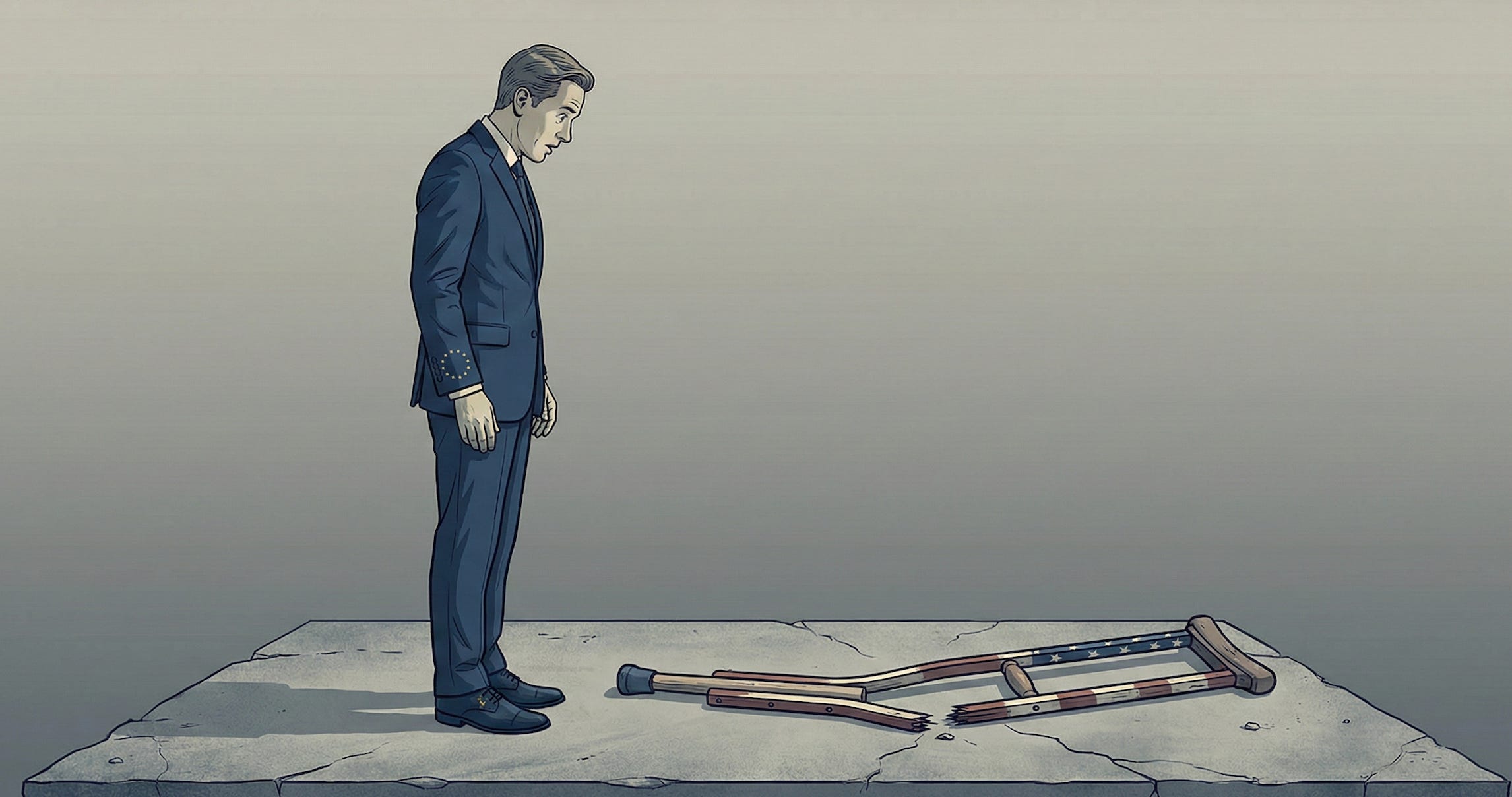
But here’s the perverse silver lining here (if you can stomach calling it that), and it’s always been one of the hills I am willing to die on, and that is - Trump’s unreliability may finally force Europe to do what it should have done years ago - build an independent capacity to support Ukraine and deter Russia without relying on the United States. The American security guarantee was always a crutch that allowed European politicians to avoid making hard choices. Now the crutch has been yanked away, and Europe has to either stand on its own feet or fall over. History suggests that Europeans find reserves of determination they didn’t know they had once the alternative is genuinely unacceptable.
Russia’s war economy is a ticking time bomb - but the fuse is longer than people hoped
The Western expectation that sanctions would quickly cripple the Russian economy was, to put it charitably, optimistic. Russia’s deep structural inequality turned out to be a wartime asset. There was a massive reservoir of underemployed provincial workers who could be redirected into the military and the arms factories without cannibalising productive sectors of the economy. The money to pay them came from squeezing the oligarchs and inflating away the savings of the middle class - in effect, a wartime wealth redistribution that may have actually improved life for the median Russian in the short term.
But this is not sustainable. Russia is burning through its sovereign wealth fund. It needs hard currency to buy weapons components, stabilise the ruble, and maintain what’s left of the welfare state, and it can’t do all three simultaneously from oil revenues alone. The sources of long-term economic growth - human capital, foreign investment, technological transfer - are being systematically destroyed. Transitioning back to a peacetime economy will be orders of magnitude harder than transitioning to a war footing, because people’s expectations are higher in peace than in war. Putin will need all sanctions lifted to normalise, and that’s not something Trump can deliver unilaterally even if he wanted to, because European sanctions are Europe’s to control.
The human cost
This is the thing that gets lost in every strategic analysis, including this one. Behind all the talk of attrition rates and weapons systems and diplomatic manoeuvring are real people - Ukrainian civilians living under daily drone attacks, Ukrainian soldiers holding positions in frozen trenches, Ukrainian workers that work 24hr shifts trying to keep the flickering lights on and ending up with frostbites or collapsing from exhaustion. Children who have spent a quarter of their lives under bombardment. Families separated by front lines that didn’t exist four years ago. An entire generation traumatised in ways that will shape Ukrainian society for decades.
The war has settled into a grim equilibrium: Russia can’t advance meaningfully, Ukraine can’t expel Russia without more support than the West is currently willing to provide, and neither side can afford to stop fighting because the political costs of admitting failure are too high. It is, in the most clinical sense, a stalemate - and stalemates in wars of attrition are measured not in territory but in bodies.
Where Does This Leave Us?
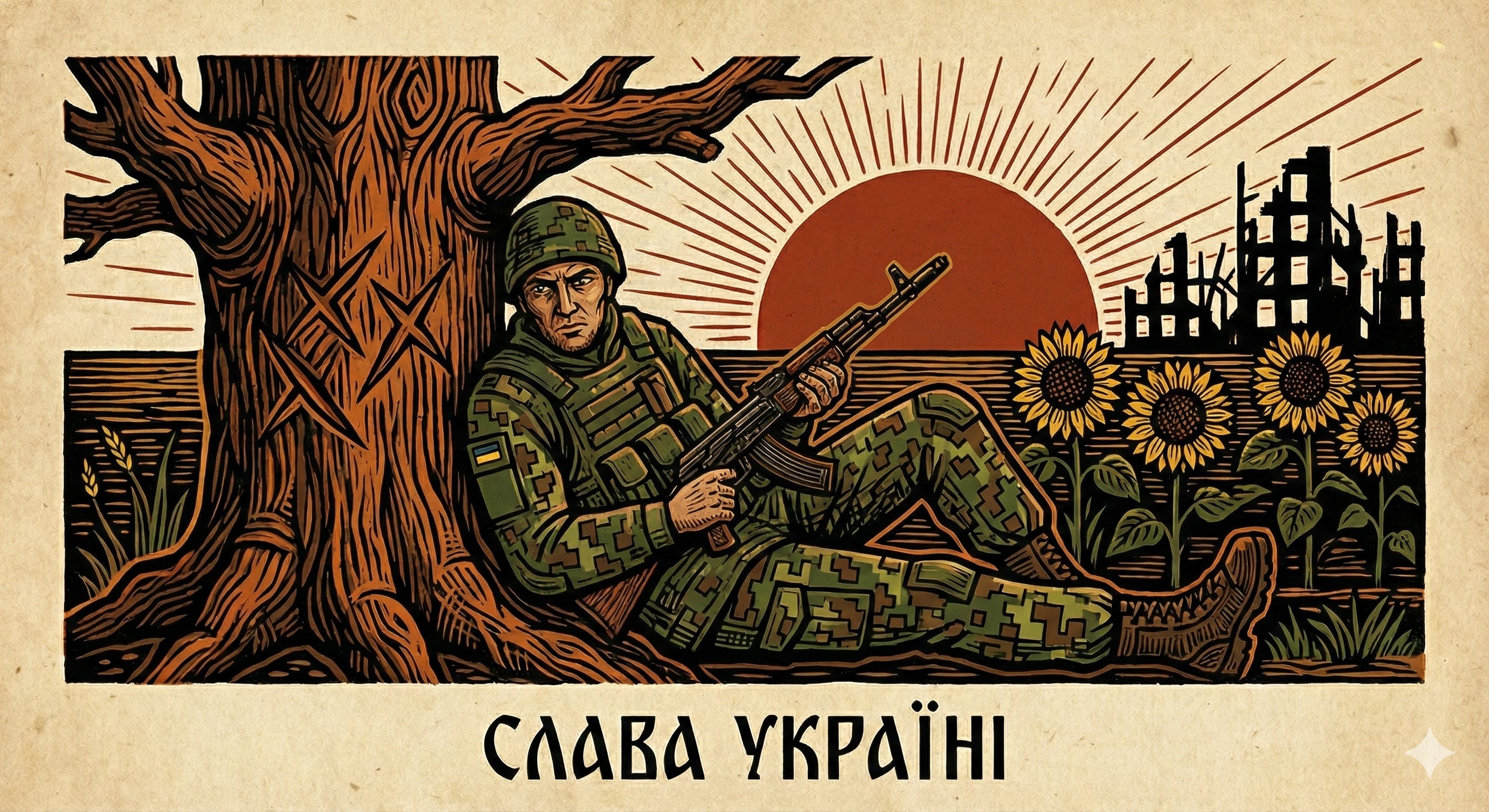
Four years in, the fundamental dynamics of this war have not changed as much as the headlines suggest. Ukraine is still fighting a defensive war on its own soil, which gives it structural advantages in attrition. Russia is still fighting a war of conquest that requires it to occupy and administer hostile territory, which bleeds resources at a rate Moscow can’t sustain indefinitely. The West is still torn between wanting Ukraine to win and not wanting to pay the price of victory.
What has changed is the political landscape. America’s commitment is now unreliable. Europe is being forced into a more independent posture. Russia’s initial war aims have been permanently foreclosed - there will be no puppet government in Kyiv, no “denazification,” no quick absorption of Ukraine into Russia’s sphere. What Russia is left fighting for is, essentially, the right to not admit that it lost, which is a remarkably thin justification for the continued sacrifice of its young men.
The Russian theory of victory - that this was really an American proxy project and that once American will collapsed, Ukraine would fold - is being tested in real time. And so far, Ukraine hasn’t folded. If the Ukrainians can hold the line without American aid, it won’t just be a military achievement. It will be the definitive refutation of the idea that the only thing standing between Russia and regional hegemony was American coercion. It will prove that Ukraine is, in fact, a real country with a real national will and strong agency - the one thing Russia could never bring itself to believe, let alone admit.
That would require an enormous sacrifice from the Ukrainian people. Bigger, perhaps, than what they’ve already endured. But then again, what choice do they have?
I write these final words with actual tears in my eyes. I wish this wasn’t the case. I wish the price of breaking free from the “Russian world” was lower for Ukraine. I wish there were more I could do than donate to fundraisers and write these lines. But reality is not what we wish it to be. It just is.
An amusing thought crossed my mind a while back, when I was trying to explain what Westerners assume to be Eastern European pessimism - what I call realism. When you compare how we grew up, the gaps are immeasurable. Westerners grew up on fairy tales where the good always wins and the hero gets a happy ever after. Slavic folklore, in contrast, teaches us that for the good to win, the hero must sacrifice to a point that someone raised on a Disneyfied version of the world, would consider futile.
But it is not futile. On a long enough time scale, Ukrainian integration into Europe and a final break with the Russian sphere of influence - a sphere that is itself dwindling because of this war, as Russia slides into the role of a de facto vassal state of China - will be worth it.
Слава Україні! Героям слава!
You could also add for “Good”, that with the invasion itself was the greatest pro-NATO advertisement ever produced. For a war that was party fought to “stop NATO enlargement” or whatever… Putin did a bang up job of directly contributing to its growth.
A fine elucidation of the Reality, and spoken from the path with heart.