

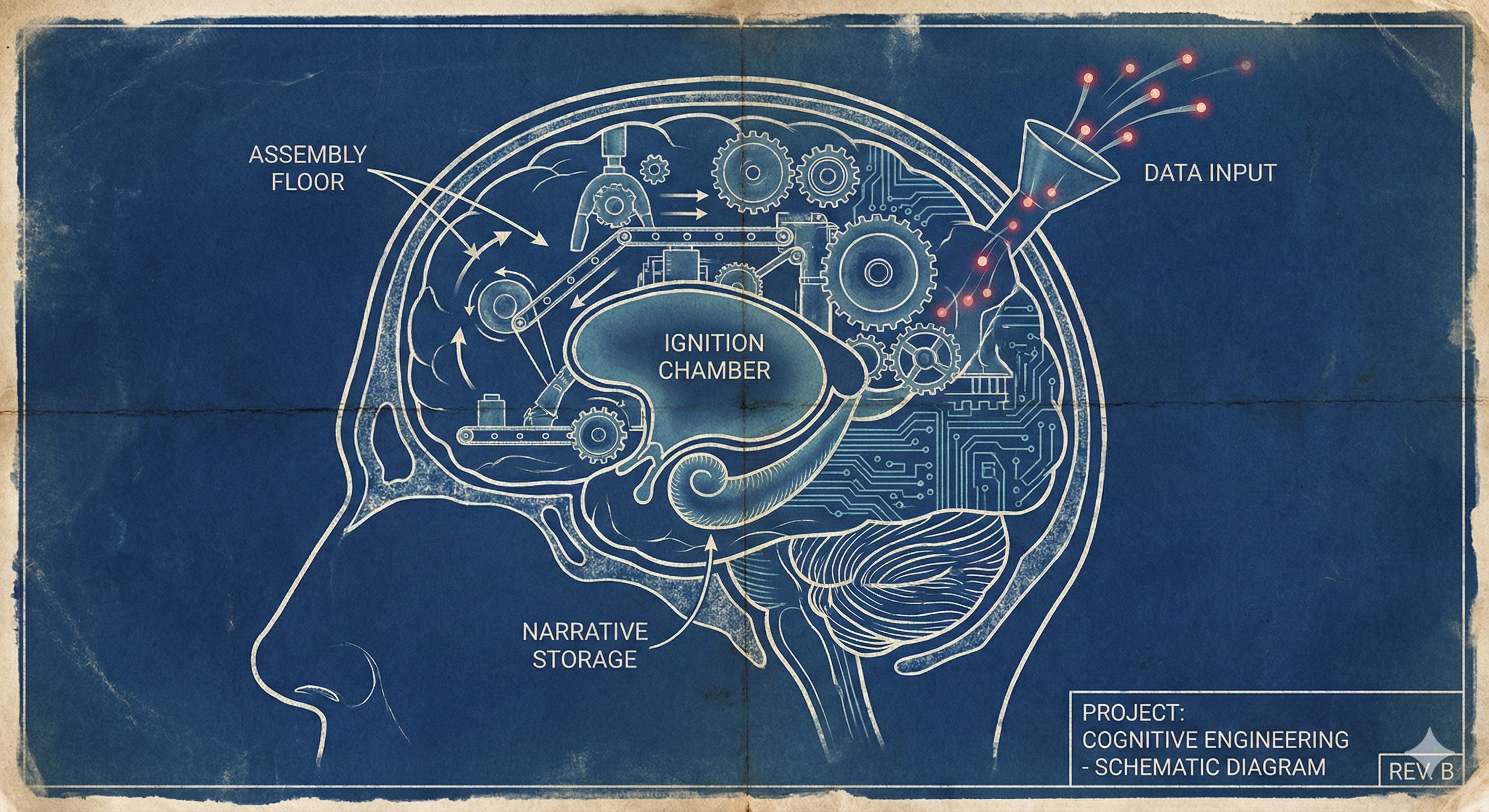
There is a moment - and if you are truly honest with yourself, you will recognise it - when scattered pieces of information suddenly snap together like a jigsaw you did not know you were assembling. A pattern emerges, a hidden truth reveals itself, and you feel the thrill: I see it. I see what the normies are missing!
That thrill, a genuine dopamine hit, is authentic. The discovery that triggered it is not.
What you have just experienced is the output of the most sophisticated psychological engineering operation in modern history. Not a hack, nor your average cheap propaganda. Something far more elegant: a system designed to make you do the work, to arrive at a pre-determined conclusion under the genuine conviction that it was your own.
To the best of my knowledge and abilities, I will try to walk you through how this machine works. Not because I am smarter - odds are, I am not - but because I have been there many times. I was born and raised to be wary of Russian propaganda. I was immunised early, and have antibodies most Westerners were never given the chance to develop. And despite all of that, I have still slipped in the past. I will likely slip again in the future.
That is not a confession of weakness, it is a measure of the engineering genius of the apparatus they have developed.
And if you have fallen for any of these narratives too, that does not make you foolish. Quite the opposite - you need to be reasonably intelligent, curious, and sceptical of official narratives to be a good target. Credulous people are useless to this machine. It needs minds that work - minds that seek patterns, question authority, and refuse to accept things at face value. This propaganda apparatus is designed for people who think. That is what makes it extraordinary, and that is what makes it dangerous.
And I say “extraordinary” with full awareness of what I am praising. As an Eastern European who grew up in the meat grinder of this machine (my country is #1 target for Russian propaganda - it’s where they test ALL their narratives before shipping them to the West), I have approximately the same relationship to Russian propaganda engineering that an oncologist has to cancer: profound respect for its sophistication, and an absolute commitment to destroying it. These are not mutually exclusive positions. If anything, underestimating the craftsmanship is how you lose.
So let us study the blueprints.
The Weapon That Actually Works
Here is something the Western security establishment spent decades getting catastrophically wrong.
Throughout the Cold War, NATO obsessed over Soviet missiles, tank divisions, submarine patrols, and nuclear warheads. Reasonable enough - the arsenal was enormous. Intelligence agencies poured resources into tracking Russian military capabilities, mapping launch sites, running war games.
Meanwhile, the KGB allocated roughly 85 % of its resources to something else entirely.
Not espionage. Not stealing secrets. Subversion.
Yuri Bezmenov, a KGB propaganda officer who defected in 1970 and gave a series of interviews throughout the 1980s, put it with the bluntness that only someone who had operated the machinery could manage: the objective was not to steal your classified documents. The objective was to change how an entire generation perceives reality - so gradually, so thoroughly, that even when confronted with authentic proof of manipulation, they would refuse to believe it. Not because the evidence was insufficient, but because their psychological framework for processing it had been fundamentally altered.
85% percent. Let that number sink in.
“Foreign politicians believe that Russia interferes in elections and referenda worldwide, but in fact it interferes with their brains and they don’t know what to do with their altered state of consciousness.” Vladislav Surkov, 2017, one of Vladimir Putin's most influential advisors for over 20 years. Source.
Now consider: Russia’s nuclear arsenal may or may not be fully operational. Maintenance is expensive, corruption in Russia is endemic, components degrade. Western analysts have spent decades debating the actual readiness of Russian strategic forces, and nobody outside the General Staff knows the real answer.
But the propaganda machine? The subversion apparatus? That weapon is maintained daily, funded generously, and staffed professionally. It is tested in live environments across dozens of countries simultaneously. And its track record is, by any honest intelligence assessment, spectacular.
Russia built a weapon that does not require a single warhead to function, cannot be intercepted by missile defence, leaves no radiation signature, and makes the target population defend the attack. If a defence contractor delivered that capability, they would win every procurement competition for the next century.
We should study it the way we study any masterwork of engineering - with the seriousness it deserves. So please, stop treating Russian propaganda and psyop campaigns as something that only the village idiots fall for, because there are people with PhDs in quantum physics and analytical minds that can make multiple millions on the stock market that have been affected by this sophisticated apparatus. This. Is. No. Joke.
First Principles: The Bezmenov Framework
Bezmenov’s defection interviews are now widely circulated online, which is itself an irony we will return to. He described a four-stage process for undermining a target society, and the timelines he provided deserve attention because they tell you something critical about how Russia thinks about strategic competition.
Demoralisation
Takes 15-20 years. One generation of students. The objective is not to recruit Soviet sympathisers - that would be easily detectable. The objective is to produce a cohort of citizens who have been subtly trained to distrust their own institutions, question their own values, and reject information that contradicts their acquired worldview. You do this through education, media, cultural institutions, and - crucially - by exploiting the target society’s own commitment to open debate, its’ free speech determinism and democratic institutions. You do not suppress free speech. You flood it.
Destabilisation
Takes 2-5 years. Once the demoralised generation occupies positions of influence, you exploit the fractures. Economic anxiety, social division and tensions, institutional distrust - all the fault lines that demoralisation created now become operational leverage.
Crisis
Takes as little as 6 weeks. A society sufficiently destabilised can be tipped into genuine political crisis or even civil unrest through relatively modest intervention.
Normalisation
The aftermath - the new reality is accepted, and the original framework is forgotten.
The timelines matter because they reveal something Westerners struggle to internalise: Russia measures influence operations in generations, not election cycles. It’s something that our cyclical democratic societies simply cannot comprehend. A narrative planted today may not be harvested for twenty years. A cultural shift engineered in a university system this decade produces political leaders two decades from now. This is patient, industrial-scale psychological engineering with long-term planning horizons.
And here is the part that should genuinely unsettle you: Bezmenov gave these interviews in 1984. He described the demoralisation phase as already largely complete for the United States. That was forty years ago.
His interviews now circulate primarily in conspiracy theory communities - often cited to support the very narratives he was warning about. If you wanted a single data point to demonstrate the machine’s effectiveness, that would be it.
The 80/20 Rule: Why Good Propaganda Is Mostly True
This is the part most people get wrong, and it is the single most important thing I can relay.
Effective propaganda is not lies. Effective propaganda is overwhelmingly factual - with strategic distortion applied at precisely the points where it changes the conclusion.
Think of it as an 80/20 ratio. 80% of what you encounter in a well-constructed propaganda narrative is verifiably true. Real events, real documents, real quotes, real grievances. The remaining 20% is not necessarily false either - it is selection, framing, omission, and manufactured causation. The facts are real. The story they are arranged to tell is not.
This is what makes it so devastatingly effective. When someone challenges the narrative, you can point to the 80% and say: “Look, this is documented. This actually happened. Check it yourself. Do your own research!” And you would be correct. It is documented. It did happen. The manipulation is not in the facts. It is in which facts were selected, which were omitted, how they were sequenced, and what conclusion their arrangement leads you toward.
A concrete example from the historical record.
NATO did expand eastward. That is a fact. Various Western officials did make informal assurances about NATO’s intentions during German reunification. That is also a fact. Eastern European nations were eager to join NATO after decades of Soviet domination. Fact. Russia expressed opposition to this expansion. Fact.
80% true. The narrative practically writes itself.
Now the 20%: the implication that NATO expansion was directed against Russia rather than requested by nations fleeing Russia; the omission that every single Eastern European country joined voluntarily, often over years of lobbying for admission; the erasure of the historical context that these nations had direct, lived experience of Russian occupation and were seeking security guarantees for entirely rational reasons; and the manufactured conclusion that Russian aggression is therefore a defensive response to Western provocation rather than the continuation of an imperial project that predates NATO by centuries.
Every individual fact checks out. The conclusion is engineered. And because you verified the facts yourself, you feel confident in the conclusion. That is the mechanism. That is the 80/20.
The Breadcrumb Trail: Engineering Your Epiphany

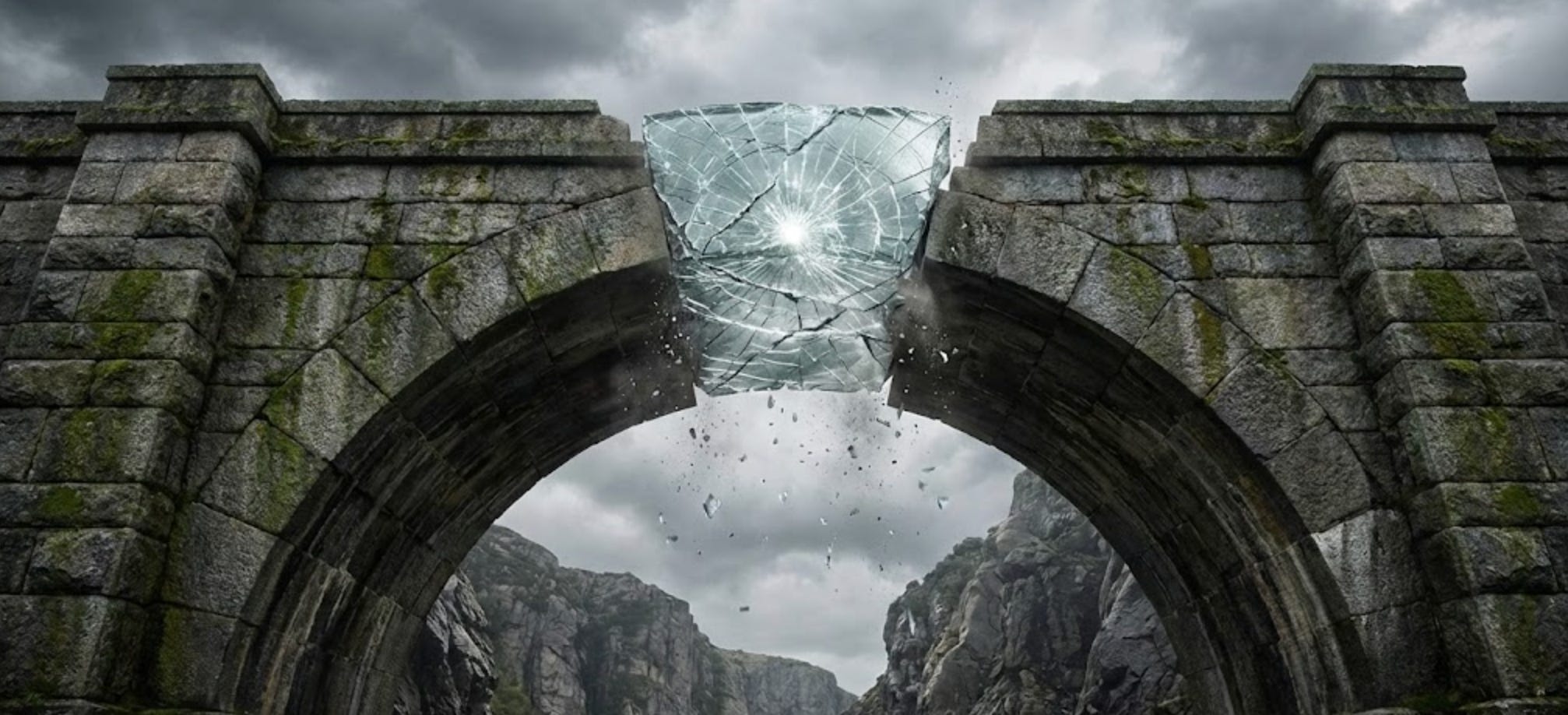
Now we arrive at the operational heart of the system, and it is genuinely brilliant. I say this with the same tone a structural engineer might use while examining a bridge designed to collapse at a specific moment under a specific load: professional admiration for the craft, horror at the intent.
The core principle is simple: never tell the target what to think. Instead, lay a trail of fragments - individually true, collectively misleading - and let the target assemble them into the desired conclusion independently.
The trail works like this:
A verified fact appears on one platform. A related but separate fact surfaces on another. A third data point emerges from what appears to be an entirely independent source. A pattern begins to form. The target - intelligent, curious, sceptical of mainstream narratives - connects the dots. An insight crystallises.
And here is the masterstroke: because the target assembled the conclusion themselves, through their own reasoning, using verified facts, the conclusion now carries the full emotional weight of personal discovery. It is not something they were told. It is something they figured out. It is theirs.
This changes everything about how the belief functions psychologically.
An idea given to you by someone else can be examined at arm’s length. You can evaluate the source, weigh the evidence, consider alternatives. An idea you generated yourself is woven into your identity. Challenging it does not feel like updating a belief - it feels like admitting you were duped. And the smarter you are, the higher the psychological cost of that admission.
The Russian intelligence services understood this dynamic decades before Western behavioural psychology caught up with the terminology. What researchers now call the “IKEA effect” - people value things more when they helped create them - the KGB had operationalised for ideological subversion by the 1960s.
The breadcrumb method also exploits something specific about how humans process information. We store knowledge as narratives, as stories, not as isolated facts. When you encounter a new piece of information, your brain does not file it in a neutral database. It integrates it into an existing story. If the story is compelling - if it has heroes and villains, hidden truths and corrupt gatekeepers - new information gets absorbed into that framework almost automatically.
This means that debunking individual facts is nearly useless. You can disprove Fact C, but the narrative scaffold built from Facts A and B remains standing, and the target simply finds Fact D to replace it. You are not fighting a claim. You are fighting a story. And stories are extraordinarily resilient.
The professionals who design these trails understand targeting with a precision that would impress any marketing firm. Different trails for different audiences. Anti-establishment breadcrumbs for libertarians. Anti-corporate breadcrumbs for progressives. Anti-immigration breadcrumbs for cultural conservatives. Anti-war breadcrumbs for the left. The destination is always the same - distrust your institutions, doubt your allies, disengage from collective action - but the paths are customised, highly tailored to serve the carefully analyzed segment.
The Troll Factory: Industrialising Manipulation
In 2013, the Russian government did something that should have triggered a complete reassessment of Western information security: it industrialised online influence operations.
The Internet Research Agency, based in St. Petersburg, was not a shadowy intelligence cell. It was a company. It had human resources departments. Performance reviews. Salary ranges and bonuses. Production quotas. Shift schedules. It was propaganda as assembly line.
Yevgeny Prigozhin - before he became internationally known for other reasons - publicly confirmed in February 2023 what researchers had spent years documenting: “I’ve never just been the financier of the Internet Research Agency. I invented it, I created it, I managed it for a long time.”
The operational details, pieced together from former employees who spoke to journalists and from subsequent investigations, reveal a system designed for scale:
Employees worked 12-hour shifts, rotating every other day. Each operator managed multiple accounts across multiple platforms. Daily production targets: a minimum of 10 substantive posts per shift, each at least 750 characters, or 126 comments plus additional posts per account. Dedicated teams existed for each major platform. Specialised units compiled target lists - media outlets to discredit, political figures to undermine, narratives to amplify. Other units produced visual content, including memes tailored to specific cultural contexts.
The sophistication of the operational security was professional-grade: proxy servers to mask Russian IP addresses, hundreds of fabricated identities with constructed backstories, coordinated cross-platform posting designed to create the illusion that independent people in different locations were independently arriving at the same conclusions.
That last detail is critical. Remember the breadcrumb trail? The troll factory was the logistics operation that laid the breadcrumbs at scale. Hundreds of seemingly unrelated accounts, across dozens of platforms, in multiple languages, all contributing individual “facts” and “observations” that, when encountered by a real person browsing naturally, formed a pattern that appeared organic.
Researchers at Clemson University’s Media Forensics Hub eventually identified a telltale signature: activity patterns that matched Russian work schedules and Russian public holidays. The accounts went quiet on Orthodox Christmas. The machinery was visible - if you knew where to look.
But the troll factory was only one component of a much larger architecture, which operated through multiple shell companies and was designed for a single strategic purpose: making democratic societies tear themselves apart from the inside, at a fraction of the cost of a single fighter jet.
Now, add the power of AI to this equation and just imagine the scale of proliferation we are about to witness very soon.
Funding Everyone: The Portfolio Approach
Here is where the engineering becomes truly elegant, and where most people’s mental model of propaganda breaks down completely.
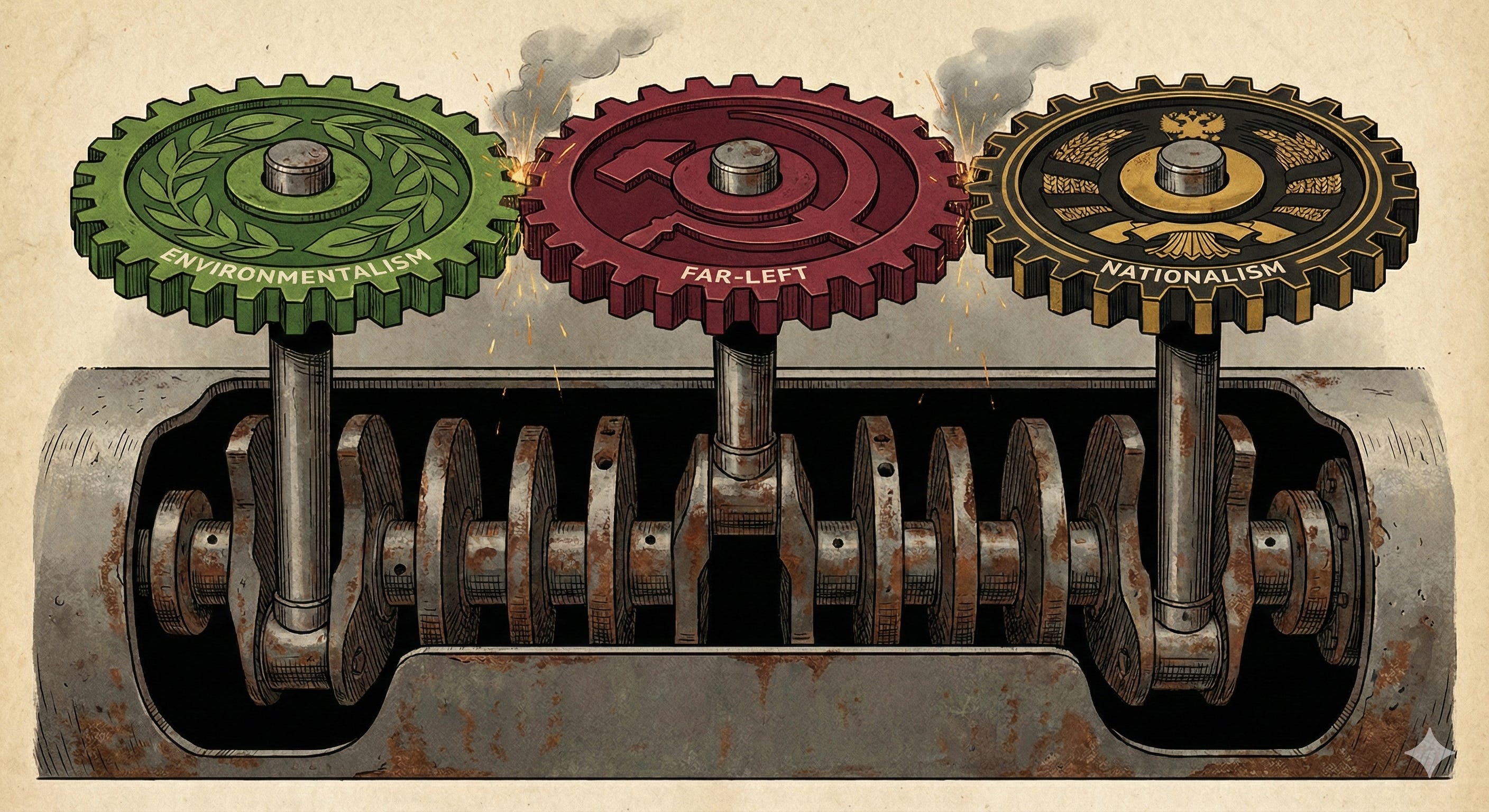
Russia does not fund its ideological allies. Russia funds disruption. Across the entire political spectrum. Simultaneously.
This is not a contradiction, but a portfolio strategy. Why would you put all your eggs in one basket? Besides, the Russians have very little use of useful idiots - the pink-haired woke lefty with an USSR t-shirt is just that…useful idiot. The Holy Grail is getting the ideologically non-aligned intelligentsia to do the foot soldering in destroying the countries Russia deems as enemies.
Documented financial flows to European political movements reveal a pattern that only makes sense when you stop thinking about ideology and start thinking about systems disruption:
Right-wing parties receive funding and support. France’s Rassemblement National secured an €11 million loan from Russian banks. Austria’s Freedom Party was caught in discussions about Russian financial support, culminating in the “Ibiza Affair” - a vice chancellor filmed apparently negotiating with someone posing as a Russian oligarch’s niece. Italy’s Lega was recorded in Moscow discussing illicit funding mechanisms through oil deals.
Left-wing parties receive support too. Through different channels, but toward the same end. Consistent pro-Russian voting patterns in the European Parliament, opposition to Ukraine support, participation in “election observer” missions designed to legitimise Russian-backed operations.
Environmental movements - yes, environmental movements - received an estimated €82 million from Russian-linked sources to oppose fracking and nuclear energy across Europe. The objective was not environmental protection. The objective was European energy dependence on Russian gas. When Belgium’s energy minister dismantled the country’s nuclear capacity, investigative journalists noted her previous legal career included work for a firm whose largest client was Gazprom. The Foundation for Political Innovation documented the pipeline: Gazprom funds environmental NGOs, which cultivate political figures, who enter government, who dismantle energy independence.
Anti-gender movements across Europe received $188 million from Russian-linked sources between 2009 and 2018 - far exceeding American Christian Right spending in the same period.
Do you see it?
Far-right parties oppose EU cohesion. Far-left parties oppose NATO. Green movements oppose energy independence. Cultural conservative movements create social polarisation. All funded simultaneously. None of them coordinated with each other. All of them, in aggregate, producing exactly the same strategic outcome: democratic paralysis.
When both the far-right and far-left oppose sanctions on Russia - for completely different ideological reasons - mainstream politicians appear isolated and extreme. When both environmentalists and nationalists oppose nuclear energy - one for ecological reasons, the other for sovereignty reasons - Europe stays dependent on Russian gas. The ideological spectrum becomes a weapon not despite its internal contradictions, but because of them.
This is portfolio diversification applied to geopolitical subversion. Some investments will fail. The portfolio outperforms regardless.
Weaponising Human Beings: The Migration Playbook
If the breadcrumb trail targets your mind, and the funding portfolio targets your politics, then the migration playbook targets your conscience.
Summer 2021. Migrants from Iraq, Afghanistan, and Syria began appearing at the Lithuanian, Polish, and Latvian borders in numbers that defied any organic explanation. Lithuania had processed 81 illegal crossings the entire previous year. In June 2021 alone: over 600.
The logistics were not subtle. Belarusian embassies in the Middle East issued visas with unusual ease. Airlines increased flights from Baghdad, Erbil, and Istanbul to Minsk. Belarusian travel agencies marketed the country as a “gateway to Europe.” Upon arrival: government-arranged hotels, state-coordinated transport to border zones, and Belarusian security forces providing wire cutters and tactical support for border crossings.
Lukashenko did not even maintain the pretence of deniability: “We will not hold them back. They are headed to enlightened, warm, cosy Europe.”
At least twenty migrants died from exposure that winter. They were not casualties of European border policy. They were ordnance - human beings weaponised to force democracies into impossible choices. Enforce border law and be filmed looking heartless. Open the borders and face domestic backlash. Either outcome produces the same result: social fracture, political polarisation, institutional erosion.
But the Belarus corridor was a refinement, not an invention. The original prototype was Syria.
The standard narrative most Westerners absorbed about the Syrian conflict - secular moderate Assad versus jihadist opposition - is a masterclass in the 80/20 method. Assad was secular. The opposition did include jihadists. Both facts are true. The omitted twenty percent changes everything.
In May 2011, as peaceful protests spread across Syria, Assad issued Legislative Decree 61, releasing hundreds of violent extremists from Sednaya Prison - the facility where Islamist radicals who had fought in Iraq were held. Among those released: founders and senior commanders of groups that would become Ahrar al-Sham, Jaysh al-Islam, and ISIS.
Bassam Barabandi, a Syrian diplomat who defected, explained the logic: the regime feared a peaceful revolution more than a violent one. Peaceful protests generate international sympathy. Jihadist insurgencies generate international ambivalence. So you create the jihadists. You release them from your own prisons, you focus your military operations on the moderate opposition while leaving the extremists to metastasise - kill, rape, torture, behead, burn alive, bury alive. You allow ISIS to expand, even selling them oil through intermediaries.
Then you present the world with a binary choice: me or the beheaders. Choose.
Russia conceived, backed and helped implement this strategy completely. When Assad was losing in 2015, Russian military intervention primarily targeted moderates, not ISIS. Russian media amplified the “jihadist opposition” narrative globally.
Millions fled. To Europe. Creating the refugee crisis of 2015-2016, which Russia then weaponised again - funding anti-immigration movements across the continent to exploit the very humanitarian catastrophe it had helped engineer. This enabled the rise of populist, euroskeptic parties that are doing the heavy lifting of undermining European unity for the Russians (whether they realize it or not).
Engineer the crisis. Weaponise the refugees. Fund the backlash. Harvest the polarisation. Repeat.
The Firehouse: Drowning Truth in Volume

There is a reason Russian propaganda does not operate like Western public relations. Western communications aim for a single, consistent, credible message. Russian information warfare aims for the opposite.
RAND Corporation coined the term “Firehose of Falsehood” in 2016, and the label captures the operational logic precisely. The method has four characteristics, and understanding them is essential to recognising the attack when you are inside it:
Volume and multichannel saturation. The same narrative, or variations of it, deployed simultaneously across state media, proxy outlets, troll networks, bot accounts, “alternative” news sites, podcasts, and social platforms. The sheer volume creates the illusion of independent verification. If dozens of apparently unrelated sources are saying similar things, it feels organic.
Speed that outpaces correction. Disinformation moves faster than fact-checking. By the time a claim is debunked, it has already been shared, screenshot-ed, meme-ified, and integrated into existing narratives. The first impression is sticky. Corrections rarely reach the same audience.
No commitment to objective reality. The content is a calculated blend of verified facts, distortions, selective omissions, and outright fabrications. It is presented through formats that visually resemble legitimate journalism. The 80/20 ratio applies at the ecosystem level: enough truth to be defensible, enough fiction to be useful.
No commitment to consistency. This is the part that confuses Western analysts most. Multiple contradictory narratives are deployed simultaneously. After Malaysia Airlines Flight 17 was shot down over Ukraine, Russian sources offered a dozen different explanations - different responsible parties, different weapons systems, different flight paths, different conspiracy theories. The goal was not to establish any single alternative narrative. The goal was to create enough confusion that no narrative - including the true one - could achieve decisive public consensus.
The psychological mechanisms the firehose exploits are well-documented. Repetition increases perceived credibility regardless of accuracy - the “illusory truth effect.” People forget where they encountered information but remember the content - “source confusion.” Familiar-sounding claims receive less critical scrutiny - “cognitive laziness.” And information consistent with existing beliefs passes through psychological defences almost unexamined - “confirmation bias.”
The net effect: truth does not get suppressed. It gets drowned. You cannot find it because it is buried under so much noise that the search itself becomes exhausting. And exhaustion - disengagement - is itself a strategic objective.
Projection: Accuse Them of What You Are Doing
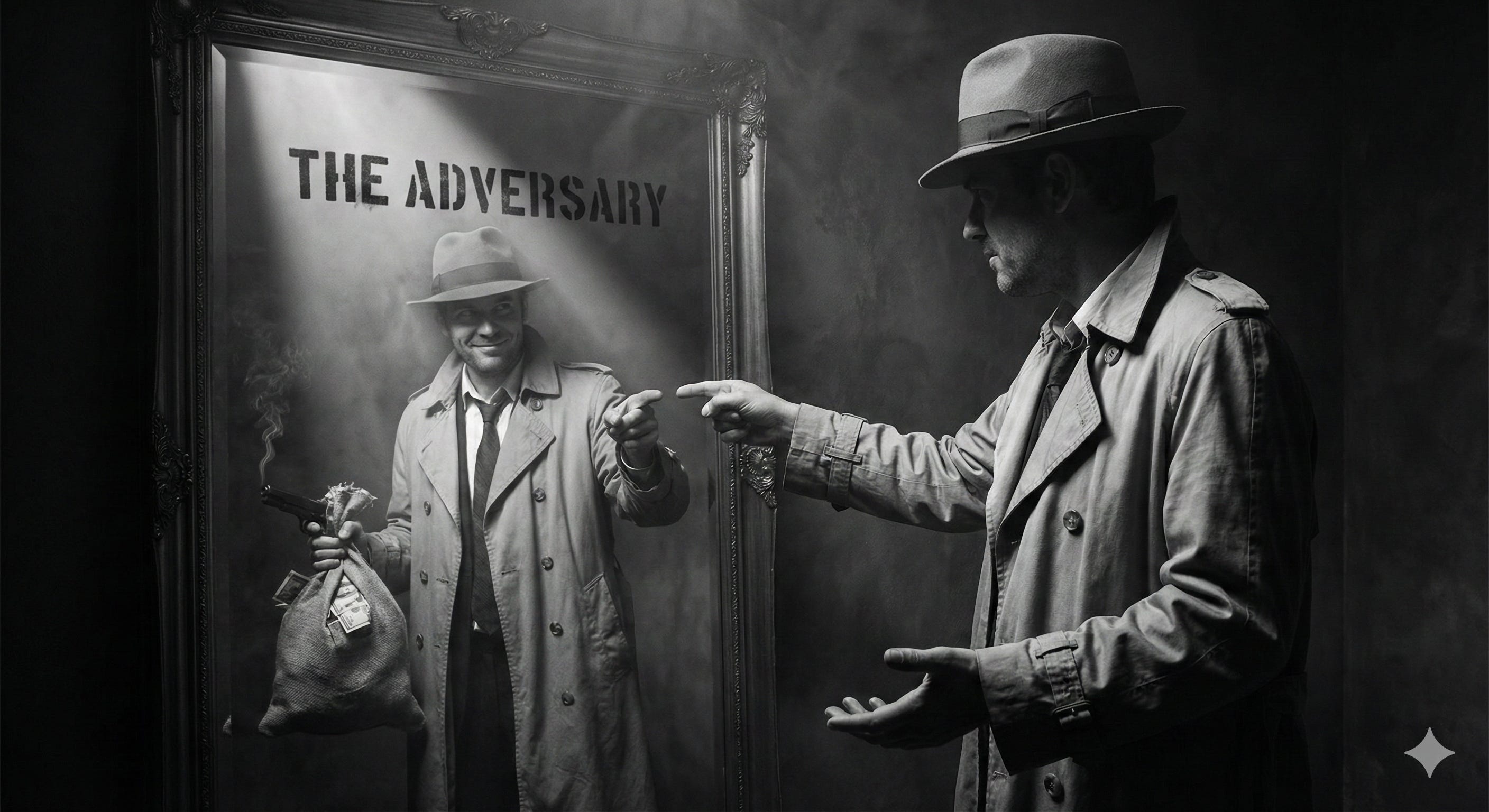
There is one technique that ties the entire system together, and it is so brazen that it functions almost as a signature.
Accuse your adversary of precisely the thing you are doing.
Russia has elevated this from a tactic to an art form. The pattern is consistent enough to serve as a diagnostic tool: when Russia accuses someone of something with unusual vehemence, check whether Russia is doing that exact thing.
The most operationally significant example is the Soros narrative. George Soros - a Hungarian Jew who built a fortune and then spent billions funding various initiatives through his Open Society Foundations (my Balkan skepticism will remain unconvinced of the altruism of billionaires with a God complex, but that’s irrelevant) - was recast through a sustained, multi-year campaign into the villain of a global conspiracy theory. The inversion is meticulous: Soros became “Nazi collaborator.” “regime change engineer”, “financier of color revolutions” (because, apparently, every time that we - Eastern Europeans - rightfully revolt against our incompetent and corrupt leaders, Soros is depositing a check in our bank account. I’ve help bring down 3 governments, yet no such check every arrived).
The campaign was incubated in Russian intelligence circles, amplified by Viktor Orbán in Hungary (with assistance from political consultants who knew exactly which cultural buttons to press), and exported across Eastern Europe before going global. The code words - “globalist,” “cosmopolitan” - are Stalin-era antisemitic terminology updated for contemporary use, legible to the intended audience while maintaining surface deniability.
The technique works because it pre-emptively occupies the accusatory space. If Russia is running influence operations to destabilise democracies, and you first accuse Soros of running influence operations to destabilise societies, then anyone who later points out what Russia is actually doing sounds like they are simply parroting the existing template. The truth looks like a copycat of the lie that preceded it.
This is also how you make invasion look like self-defence. If you spend years accusing Ukraine of being run by Nazis, then invading Ukraine becomes - in the pre-constructed narrative - an act of liberation. If you spend years accusing NATO of aggression, then your own aggression becomes “defensive response.” The aggressor becomes the victim. The victim becomes the villain. And anyone who objects is dismissed as a propagandist for the “other side.”
The Kompromat System: Controlling the Individuals
The macro-level operations - breadcrumb trails, firehose saturation, portfolio funding - create the environment. But environments are shaped by individuals, and individuals are controlled through a different mechanism: kompromat.
Compromising material. Blackmail. The oldest tool in the intelligence repertoire, refined by Russian services into something approaching a universal management system.
The operational principle, articulated by James Nixey at Chatham House, is counterintuitive: “Information is only useful if it’s not being used.” The most effective kompromat is never deployed. Its power lies in the target’s knowledge that it exists. A politician who knows compromising material is held on file does not need to be blackmailed explicitly. They self-censor. They moderate their positions. They become, gradually and organically, more amenable to Russian preferences - not because they are agents, but because they are cautious.
During the Cold War, Soviet hotels had systematically bugged rooms. KGB-trained operatives - female “swallows” and male “ravens” - targeted Western diplomats, journalists, and businessmen. The documented cases are numerous and instructive: careers destroyed, individuals turned, entire intelligence networks compromised through the leverage of personal shame.
The modern system has evolved with technology. Digital surveillance, hacked communications, stolen photographs, manipulated media. The FSB systematically collects material on domestic and foreign targets - oligarchs, regional governors, journalists, opposition figures, foreign leaders. The goal is not prosecution. The goal is leverage. A governor opposing a Kremlin-preferred candidate discovers compromising material leaked to media. An oligarch questioning policy faces regulatory action backed by financial intelligence.
The system is self-reinforcing. Once enough people know that kompromat collection is systematic and universal, the assumption that material exists — even if it does not — produces the same behavioural modification as actual possession. The panopticon does not require every cell to be monitored. It requires every prisoner to believe they might be.
Why You Are Not Stupid
I want to be very precise about this, because it matters.
If you have found yourself at any point repeating narratives that, upon reflection, served Russian strategic interests - whether about NATO expansion, or energy policy, or refugee crises, or any of the dozens of other topics that have been systematically seeded - this does not reflect poorly on your intelligence.
It reflects well on the engineering.
These are state-level operations backed by institutional budgets, executed by professionals who have refined their methods across decades, deployed through channels specifically calibrated to your psychological profile, and anchored in genuine grievances and verified facts that give the overall narrative its protective armour of credibility.
The 80/20 ratio means that your critical thinking was functioning correctly when you verified the factual components. The breadcrumb methodology means your pattern recognition was working as designed when you connected the dots. The firehose ensures that the sheer volume of confirming signals overwhelms the scattered corrections. And the community reinforcement - thousands of other intelligent people arriving at the same “independent” conclusions - provides social proof that would satisfy any reasonable person’s threshold for validation.
You were not stupid. You were targeted by a system that has been optimising against exactly your cognitive profile for longer than most of us have been alive.
The question is not whether you were susceptible. Everyone is. The question is what you do once you understand the mechanism.
How to Spot the Trail
Recognising Russian information operations in the wild is not about memorising a list of “Russian talking points.” The content shifts constantly. The structure does not.
The 80/20 signature. When a narrative is overwhelmingly factual but leads to a conclusion that - by remarkable coincidence - aligns with Russian strategic interests, examine the twenty percent. What has been omitted? What context is missing? What causal connection is implied but never actually established?
The breadcrumb pattern. When you find yourself “connecting dots” from multiple apparently independent sources and feeling that distinctive thrill of discovery, pause. Ask: were these dots placed for me to find? Is this pattern organic, or curated? The key diagnostic: if the “discovery” makes you feel smarter than the mainstream, it is almost certainly engineered. Genuine analytical insight usually makes you feel uncertain, not triumphant.
The funding question. For any movement, organisation, or narrative that consistently produces outcomes beneficial to Russian interests: follow the money. Not because everyone who opposes NATO or supports environmental causes is a Russian asset - most are not - but because the portfolio strategy means Russian money flows to all sides. The question is not “do you agree with Russia?” The question is “does Russia agree with you, and if so, why are they paying for it?”
The projection test. When Russia accuses an adversary of something with particular intensity, check whether Russia is doing that exact thing. This is not infallible, but it is remarkably reliable as a first-pass diagnostic.
The emotional check. Sophisticated propaganda creates strong emotional responses - anger, righteous indignation, the thrill of forbidden knowledge, contempt for the “mainstream.” These emotions are not evidence that you have found truth. They are evidence that you have been effectively targeted. Genuine analysis tends to produce nuance, ambivalence, and discomfort. If your conclusion makes you feel righteous, interrogate it.
The consistency test. Track whether a source or narrative maintains internal consistency over time, or whether it shifts to accommodate new circumstances while always arriving at the same conclusion. Russian information operations are notable for their willingness to deploy flatly contradictory narratives simultaneously. If the framing changes but the conclusion never does, you are looking at propaganda, not analysis.
A Note from the Neighbourhood
I am Bulgarian. I grew up in the immediate blast radius of this machine.
I have watched Russian influence operations destabilise my region for my entire conscious life. I have seen the narratives shift - Soviet brotherhood, post-Cold War partnership, Slavic solidarity, Orthodox unity, anti-Western resistance - while the operational objective remained absolutely constant: control. Over governments. Over institutions. Over energy infrastructure. Over public opinion. Over the range of thinkable thoughts.
When I watch Western commentators earnestly debate whether Russia has “legitimate security concerns” about NATO, I experience a particular emotion that does not translate well into English. We - the nations between Russia and Western Europe - are the security concern. Our desire to not be dominated is, in Moscow’s framework, the provocation. Our freedom is their threat environment.
When someone explains to me that Russia is “just responding to encirclement,” I want to ask: Why does a nuclear power with thousands of warheads need buffer states? Intercontinental ballistic missiles made geographic buffers strategically obsolete 70 years ago. The “security” argument only works if you ignore the defining military technology of the modern era. Which means it is not a security argument. It is an imperial argument in security clothing. And the fact that intelligent, well-meaning people repeat it without noticing the contradiction is - once again - a testament to the engineering.
I do not say this to be cruel. I say it because the machine that produced this confusion was built, in part, to be operated against you. And you deserve to know how it works.
The Long Game
Russian influence operations are measured in generations. Bezmenov’s demoralisation timeline is 15=20 - one full cycle of education. The cultivation of a political party takes years of funding before any return. Kompromat is collected years or decades before deployment. Breadcrumb trails are laid across months and years, not news cycles.
Democracies struggle with this. Electoral timelines are two to six years. Public attention spans are shorter. Institutional memory is limited by administration changes. The asymmetry is structural: a centralised authoritarian state with multi-generational planning horizons operating against pluralistic societies that struggle to maintain policy coherence across a single parliamentary term.
But the machine has a fundamental vulnerability, and it is the same one that every sophisticated deception shares: it requires maintenance.
Truth, once established, is self-sustaining. It does not need to be refreshed, updated, or protected from contradictory truths. A lie - even an elaborate, beautifully engineered, 80/20 blended lie - requires constant upkeep. Narratives must be adjusted as events develop. Contradictions must be managed. New breadcrumb trails must be laid as old ones are exposed. The firehose must keep flowing because the moment it stops, the sediment settles and the real topography becomes visible.
This is expensive. It is labour-intensive. And it is fragile in ways that are not immediately obvious. Every defector who explains the mechanism - Bezmenov, the IRA employees who spoke to Radio Free Europe, the diplomats who revealed the Syrian prison releases - degrades the system. Every citizen who learns to recognise the 80/20 signature, the breadcrumb pattern, the projection technique, becomes a hardened target. Every society that develops institutional antibodies - media literacy, funding transparency, cross-border intelligence sharing - raises the cost of operations.
The machine is extraordinary. I have said so, and I mean it. But it is not invincible. It succeeds primarily because its targets do not know they are targets. It fails when they do.
What You Do with This
I am not going to tell you what to think. That would rather defeat the purpose.
But I will tell you what I do, as someone who grew up in the machine’s operational environment and who has spent years studying its outputs professionally:
First, I go to extraordinary lengths to understand the culture, ideological software and even the language of the parties involved. And since I am…lucky (I wouldn’t wish this “luck” upon my worst enemy)…to know Russia and the Russian culture, language and ideology well enough, this is a tad bit easier for me than for most Westerners that are culturally, historically and geographically distanced.
I verify facts and I verify the story the facts are arranged to tell. These are separate operations. The first is journalism. The second is counterintelligence.
I ask “who benefits?” not as a conspiracy theory reflex, but as a structural analysis. When a narrative consistently produces outcomes that benefit a specific strategic actor, that is data.
I treat the feeling of “forbidden knowledge” as a warning signal, not a validation. The thrill of discovering what “they” do not want you to know is precisely the emotional payload the breadcrumb trail is designed to deliver.
I remember that genuine expertise usually produces humility, not certainty. The people who understand complex geopolitical situations most deeply are typically the ones most comfortable saying “it’s complicated” or “I could be wrong”. Anyone offering you a clean, simple narrative about a messy, complex world is selling something.
And I give myself - and you - permission to have been wrong. Recognising that you were targeted by a sophisticated operation is not an admission of stupidity. It is an act of intelligence. The only truly foolish response is to see the mechanism clearly and choose to remain inside it because your ego cannot absorb the adjustment.
The machine is real and it is running. It has been running for longer than most of us have been alive. And its single greatest achievement is convincing intelligent people that it does not exist - or that it only targets other people.
What you do with that knowledge is, finally, genuinely up to you.
Exceptional work. I will translate it in Romanian and share it. Thank you!
Very, very good article.